Maxim
2024
UI/UX Design
Role
UI/UX Designer
Scope
Product Improvement
Platform
Mobile App
Time Frame
12 days
Introduction
Setting the Scene
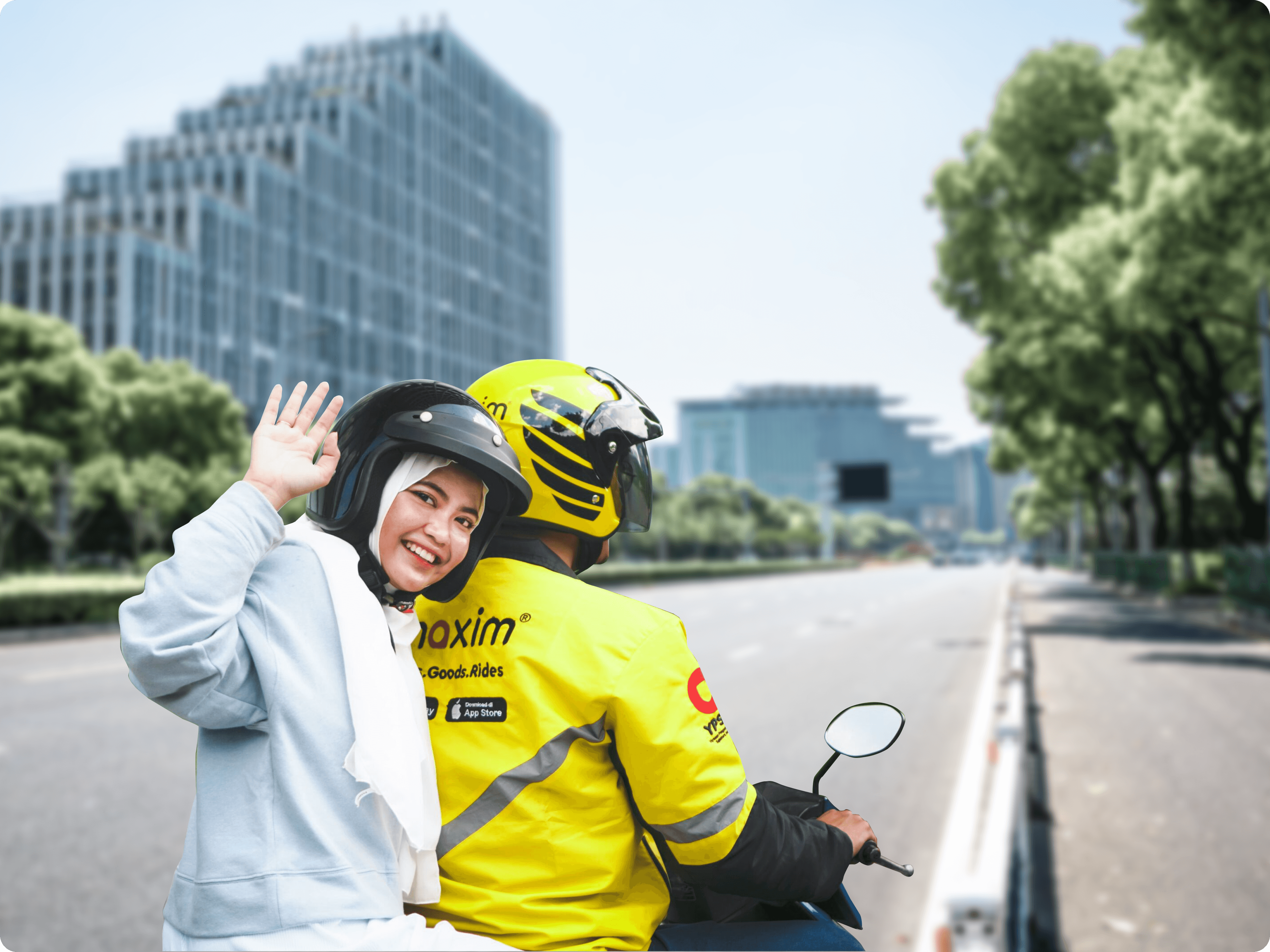
Online transportation has become the choice of the majority due to its affordability and convenience, allowing use anytime and anywhere via an app.
As a newcomer from Russia, Maxim, which entered Indonesia in 2018, has become popular with their distinctive yellow jackets, competing with the green jackets of Gojek and Grab. Maxim's popularity is attributed to having the lowest base fare compared to other competitors.
Problem Finding
Unsafe Rides, Unsafe Reputation
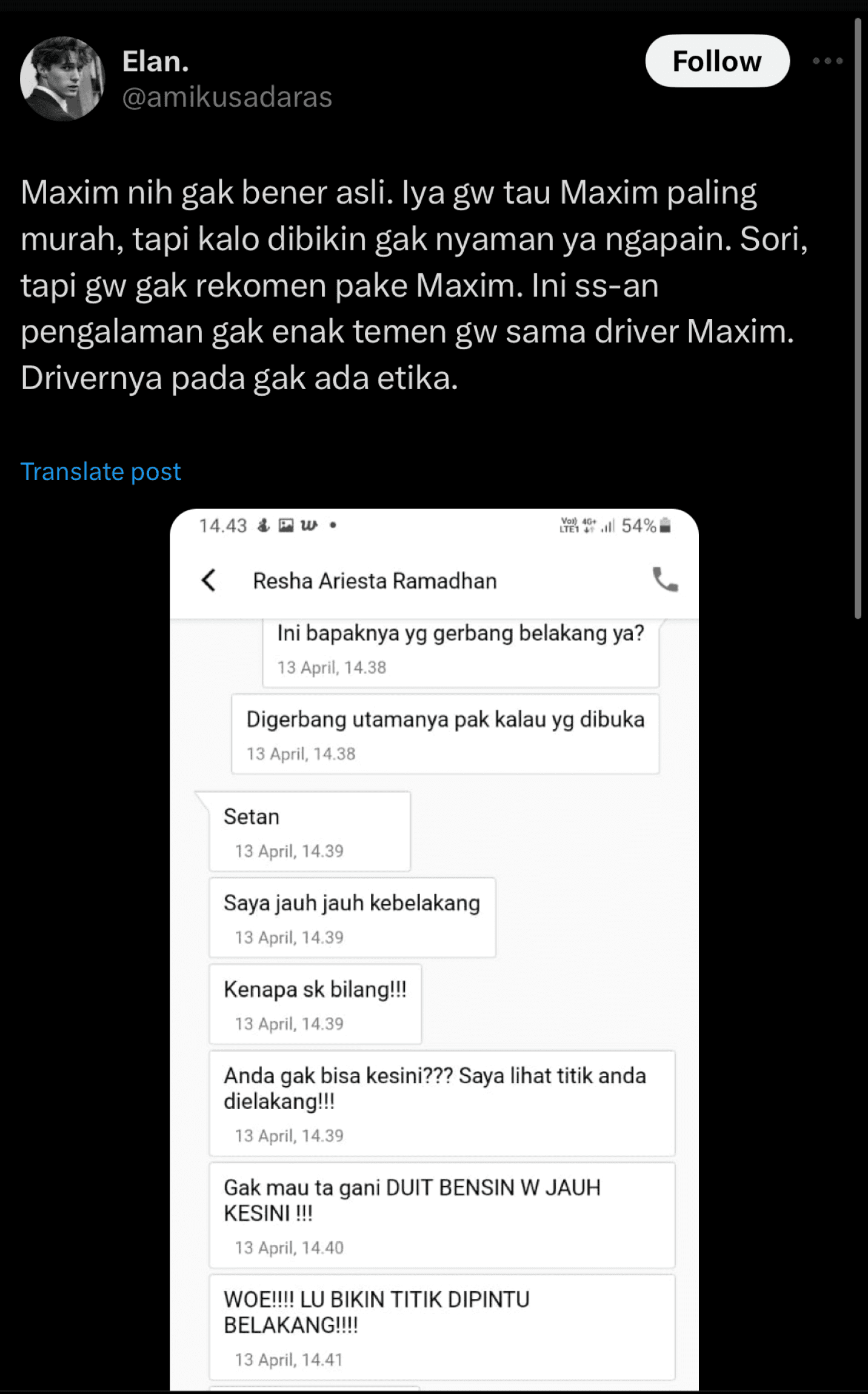
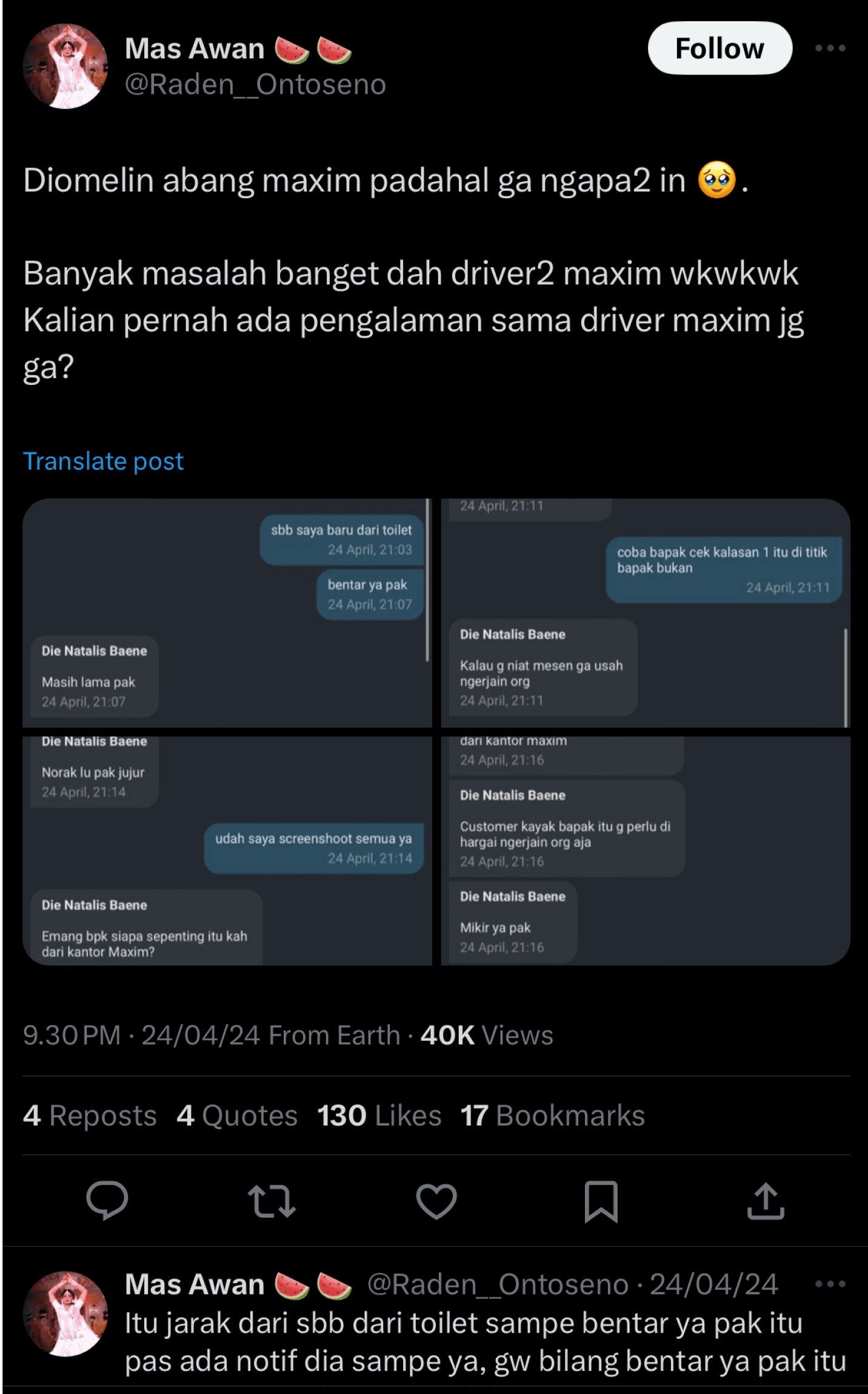
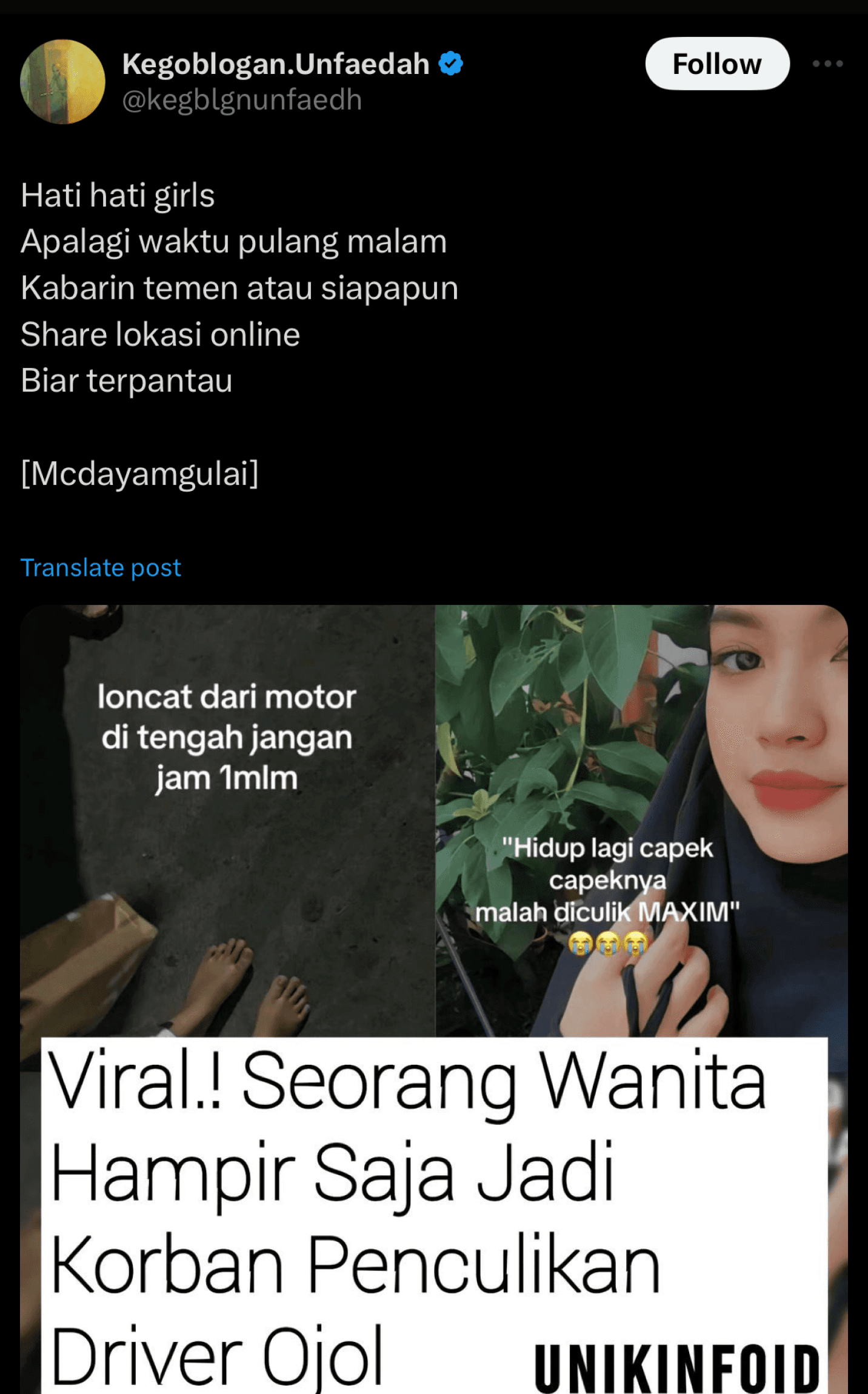
Based on the experiences of several people on social media platform X, many have shared stories about 'rogue' Maxim drivers who exhibit bad behavior and even endanger passengers, sometimes leading to sexual harassment.
From these stories, it's clear that Maxim needs to step up their game and add safety features to build trust and make passengers feel safe and comfortable during their rides. This aligns with Maxim's mission “To help people travel to their destinations in a modern, easy, and safe way.”
Objectives
Bridging User Needs and Business Goals
This research aims to develop a user-friendly app by tackling users' pain points and offering effective solutions to meet their needs, ensuring a smooth and enjoyable experience.
As the UI/UX Designer, who acts as the bridge between the business and the user, I've outlined objectives for both parties.
Business
Attract and retain more riders by making Maxim the preferred choice over competitors through a user experience.
Develop innovative features that set Maxim apart from other ride-sharing and transportation services.
User
Improve the Maxim app's user interface and overall user experience to make it more user-friendly and engaging for riders.
Provide transparent and informative content about fares, driver ratings, and safety measures to build trust among riders.
Online Transportation Choices of People in Indonesia
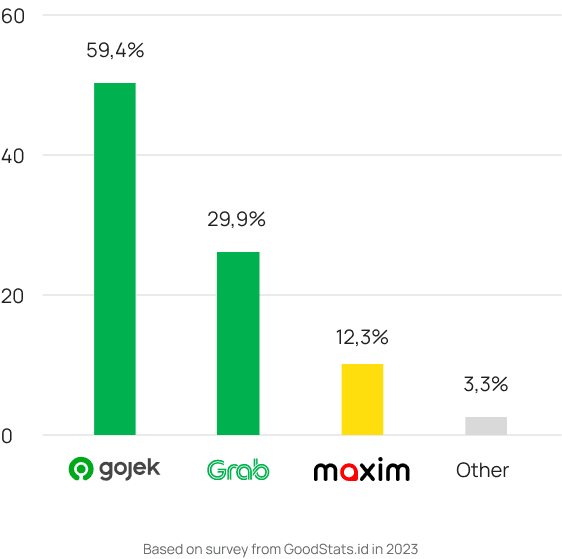
Even though Maxim is relatively new, it's already quite good, but there's still a lot to improve in terms of Safety and Trust. Actually, in every online transportation app, there are always problematic drivers. However, people in Indonesia naturally lean towards Gojek or Grab because these platforms have been around longer than Maxim and have built a stronger reputation.
This is actually an opportunity for Maxim. With its value proposition of affordability, these product improvements in safety features and building trust are Maxim's way of trying to innovate and stay competitive in Indonesia's online transportation market.
Research
A Ride Through Challenges
and Opportunities
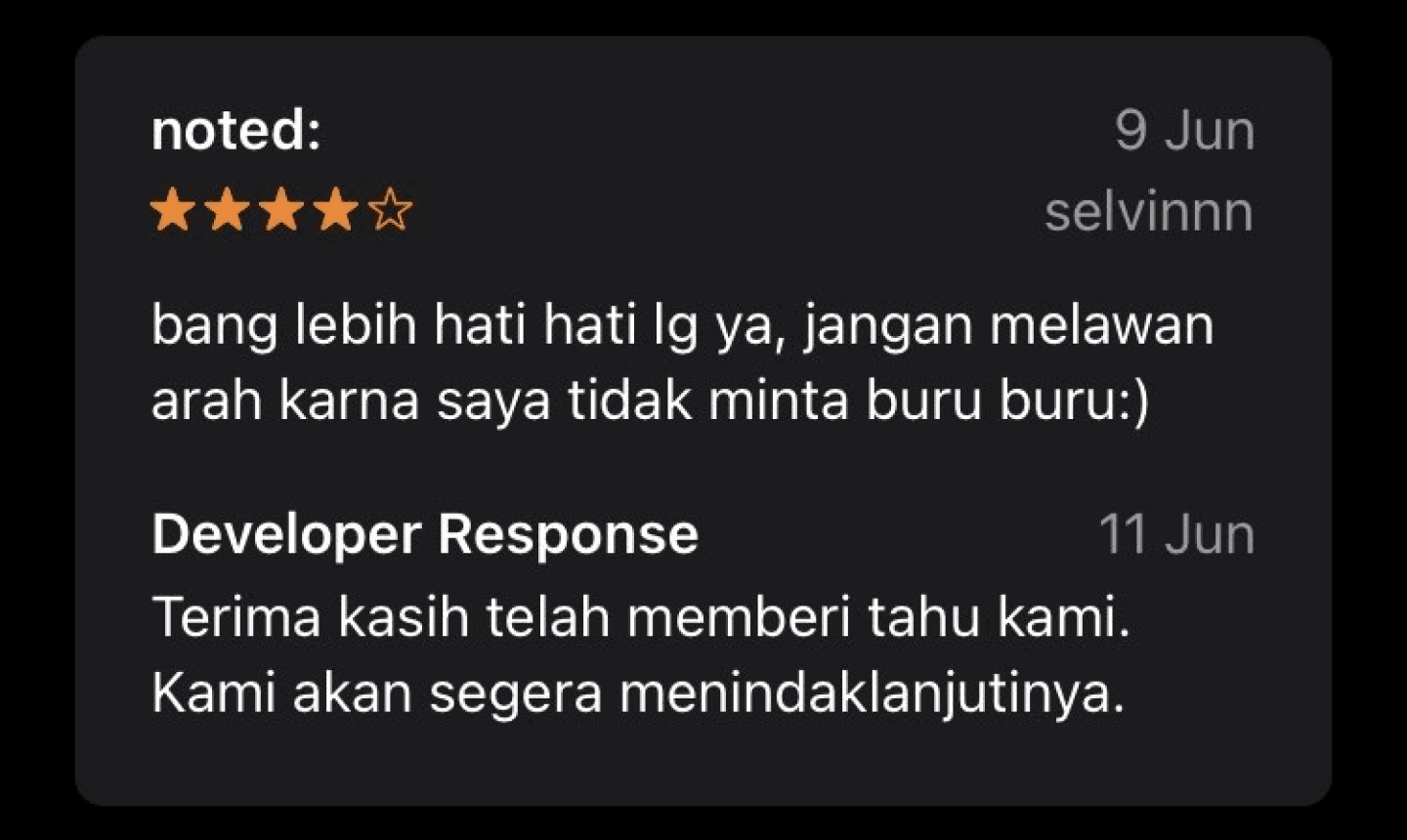
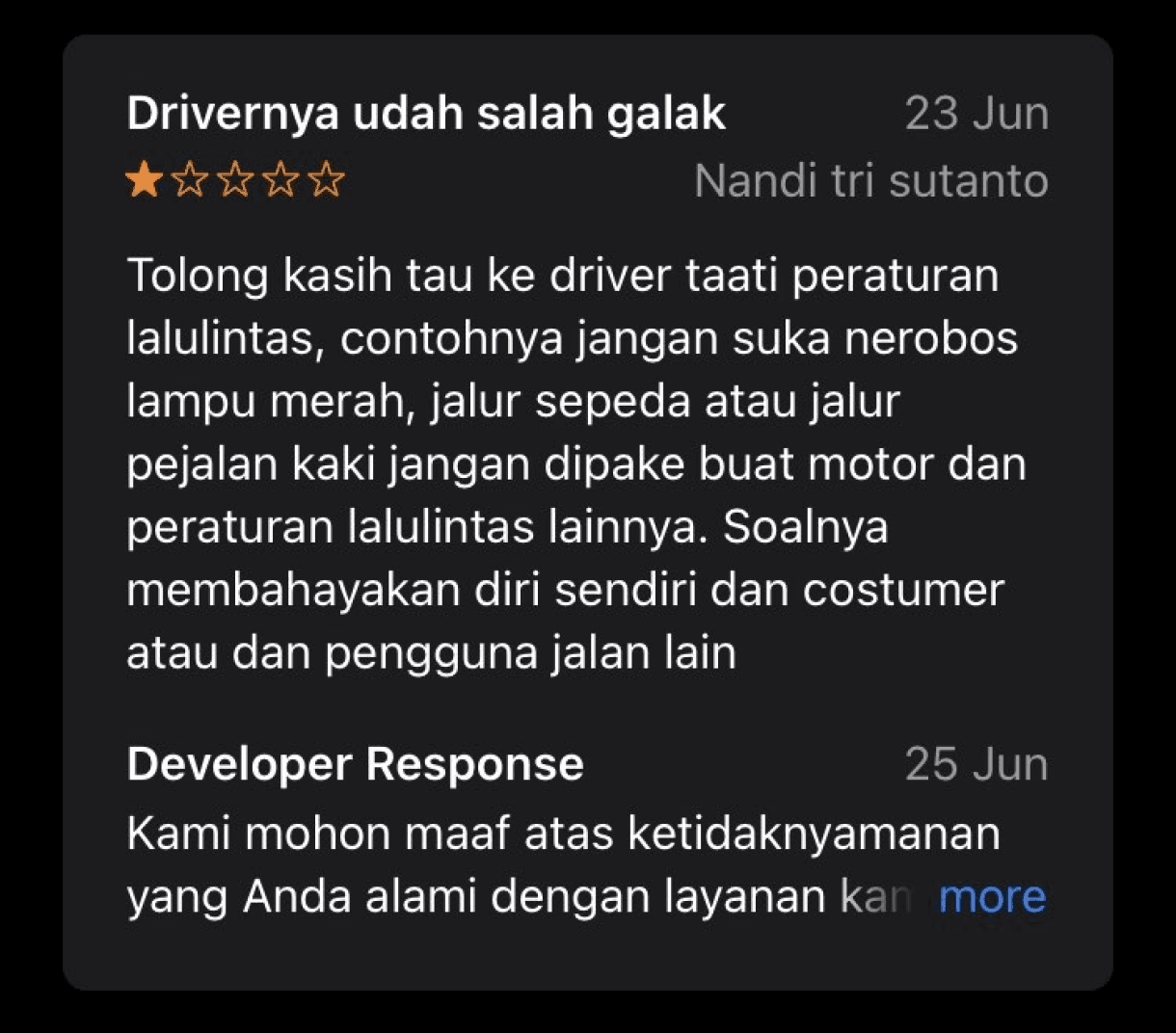
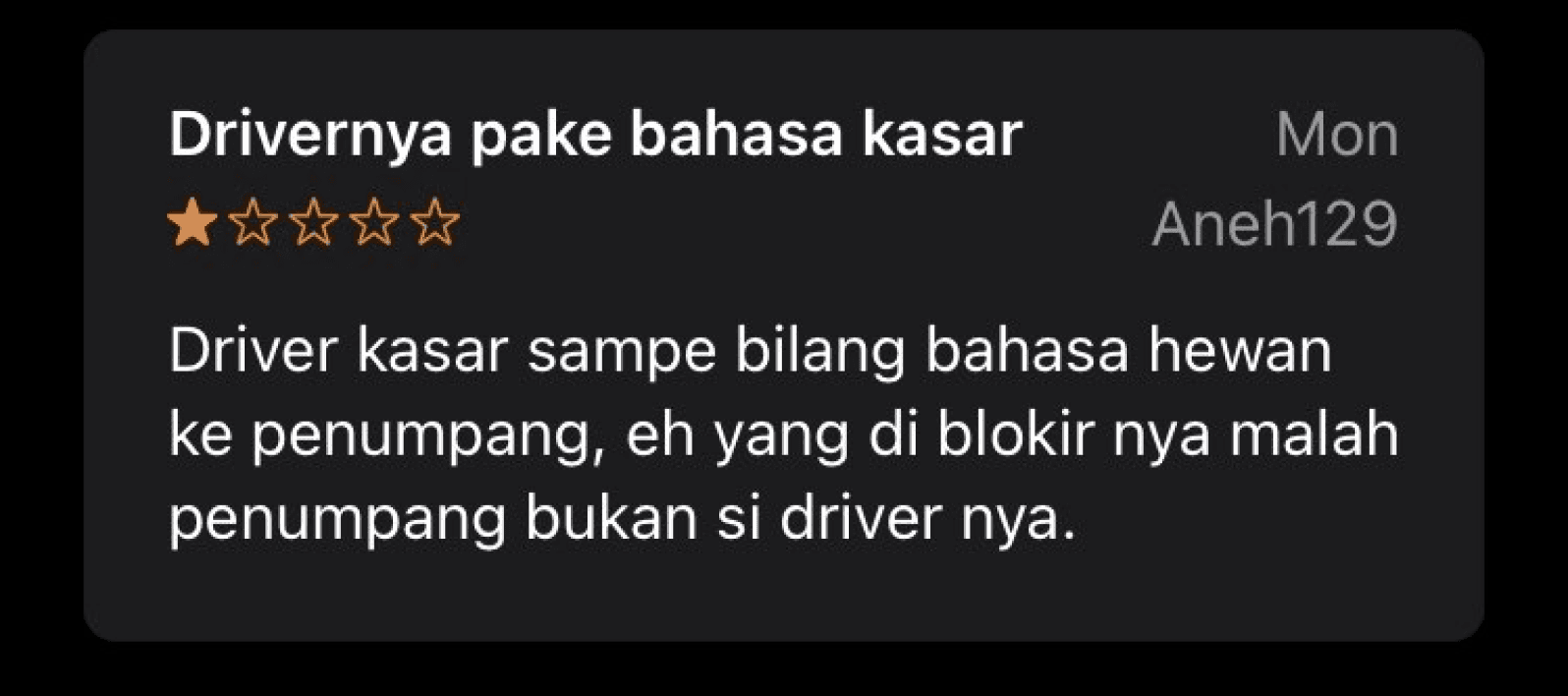
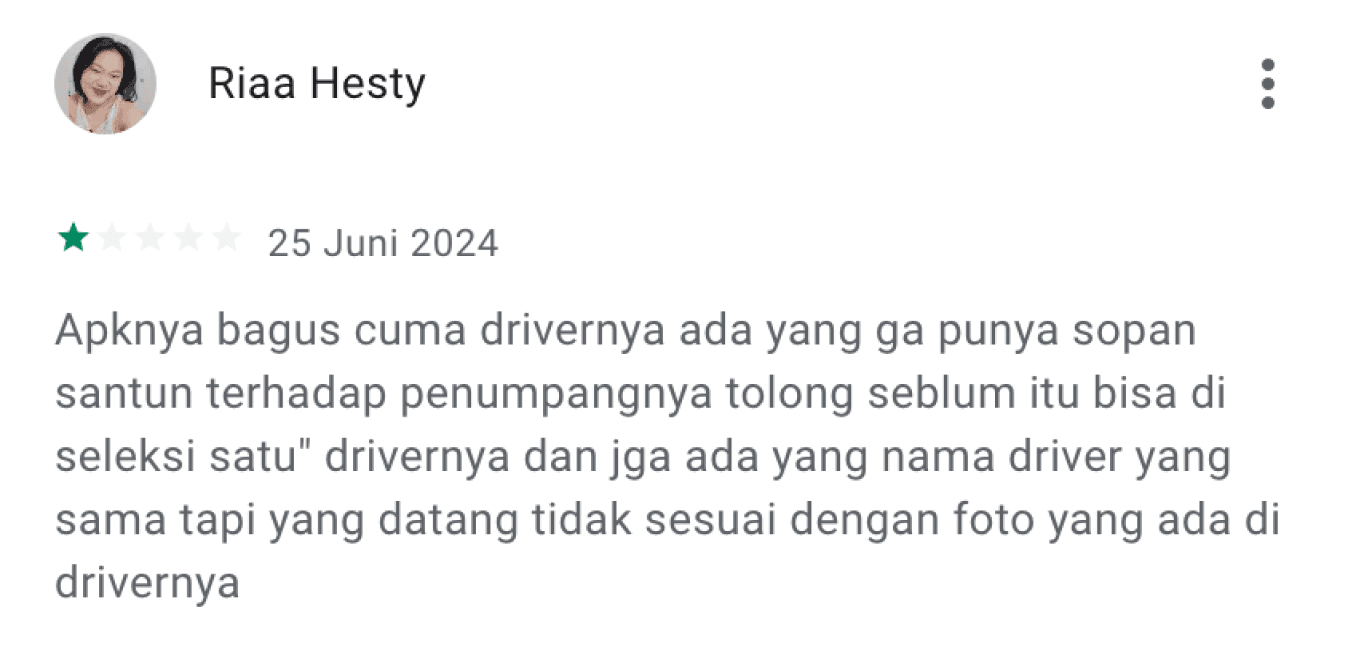
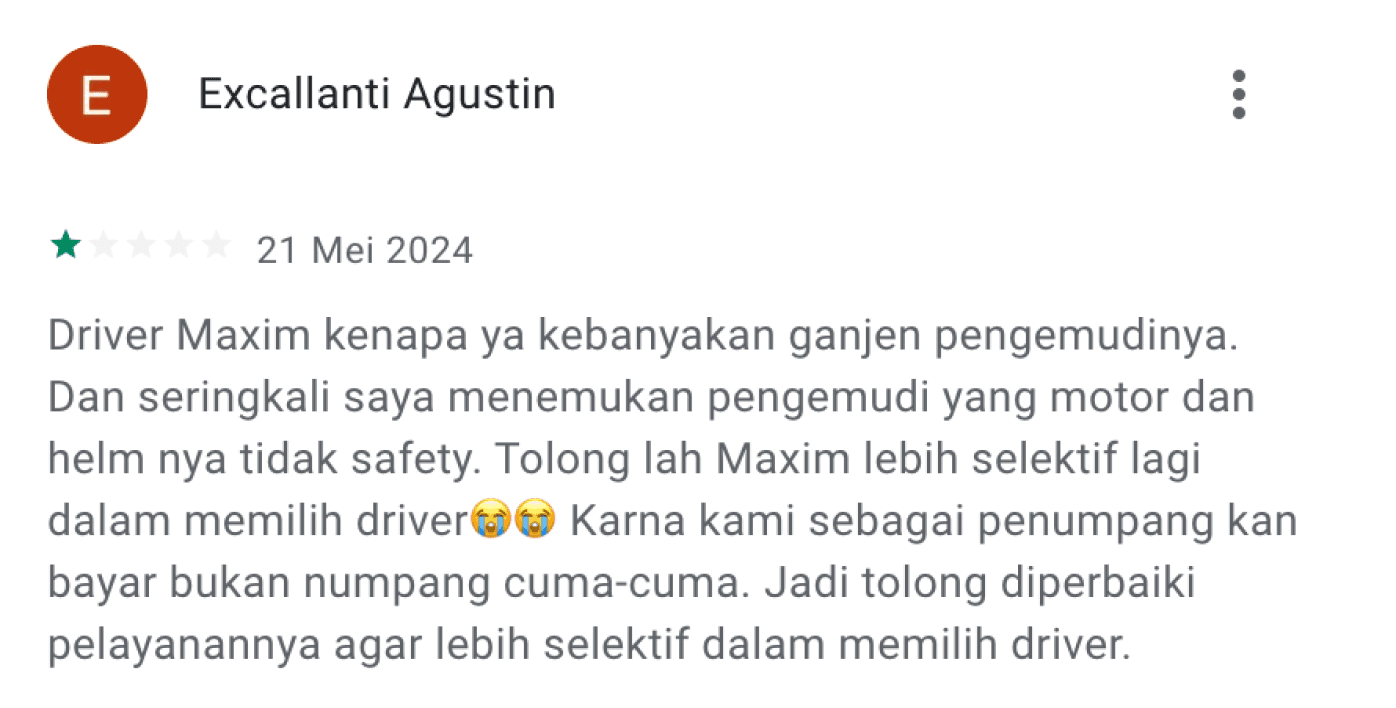
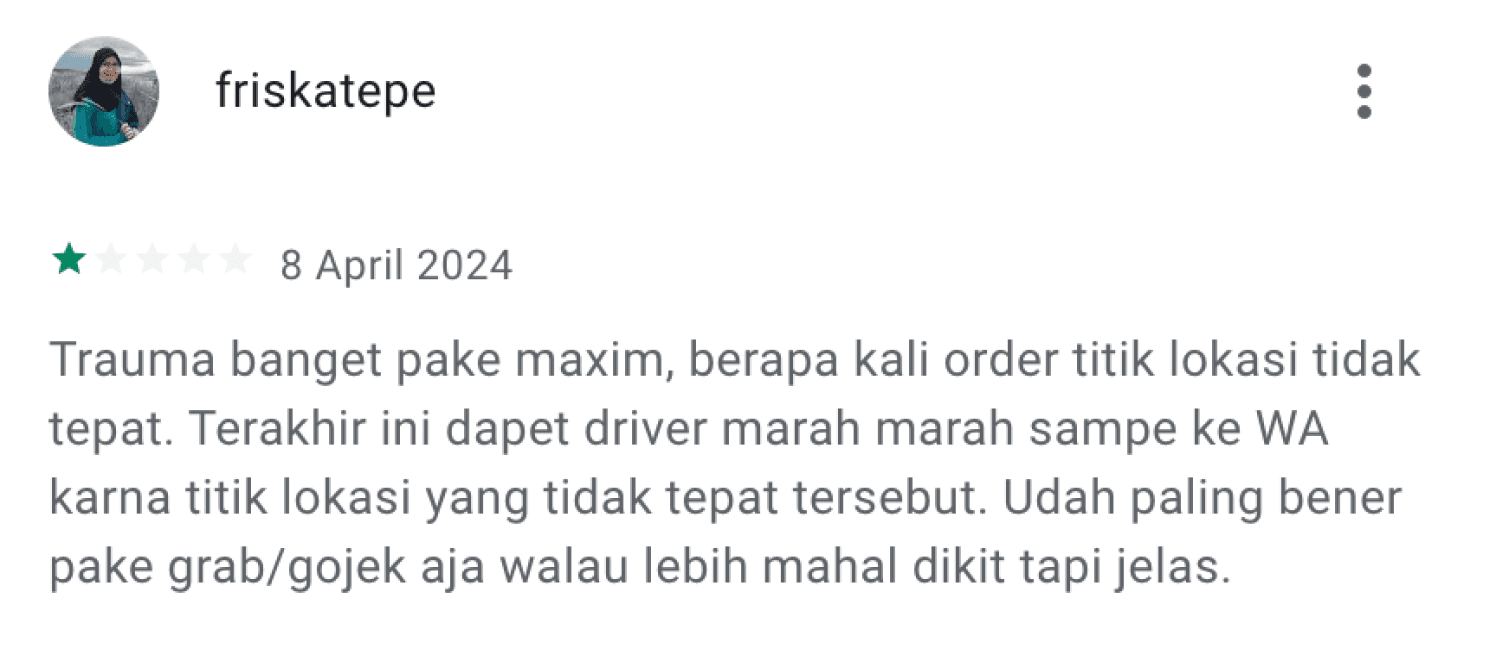
To better understand the issues at hand, I tried to empathize with the users by conducting the following research plan:
User Interview
Research Method:
This user research aims to understand user behaviors, habits, their flow, and how aware they are of safety features when using and booking online transportation services, especially through the Maxim app.
Aged 18-30 years old
Reside in the Jabodetabek area
Regular users of online transportation
Active User: Engages regularly with app features and provides feedback or reviews
Non Active User: Primarily uses competitor apps instead of Maxim
Preliminary Usability Testing
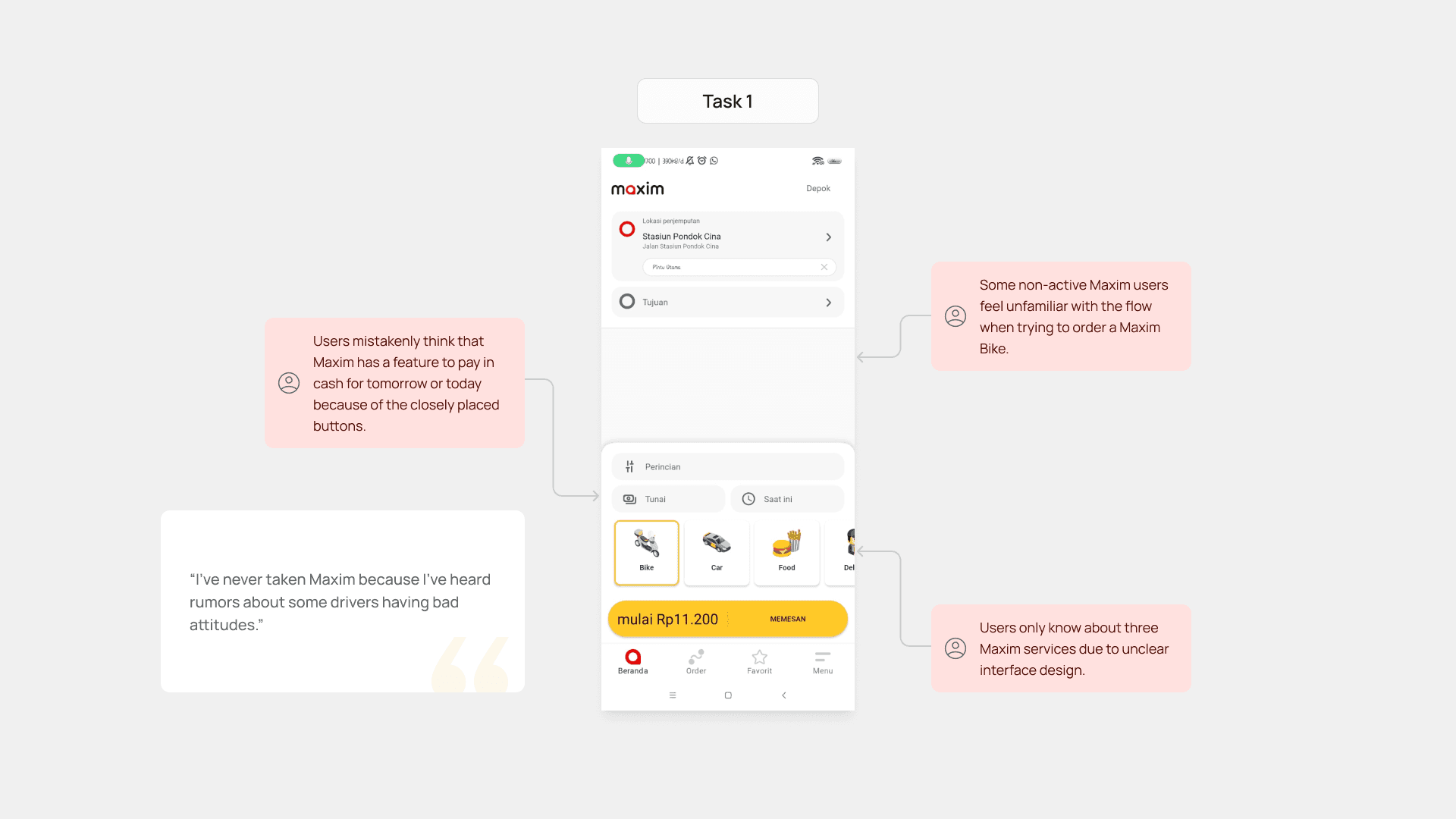
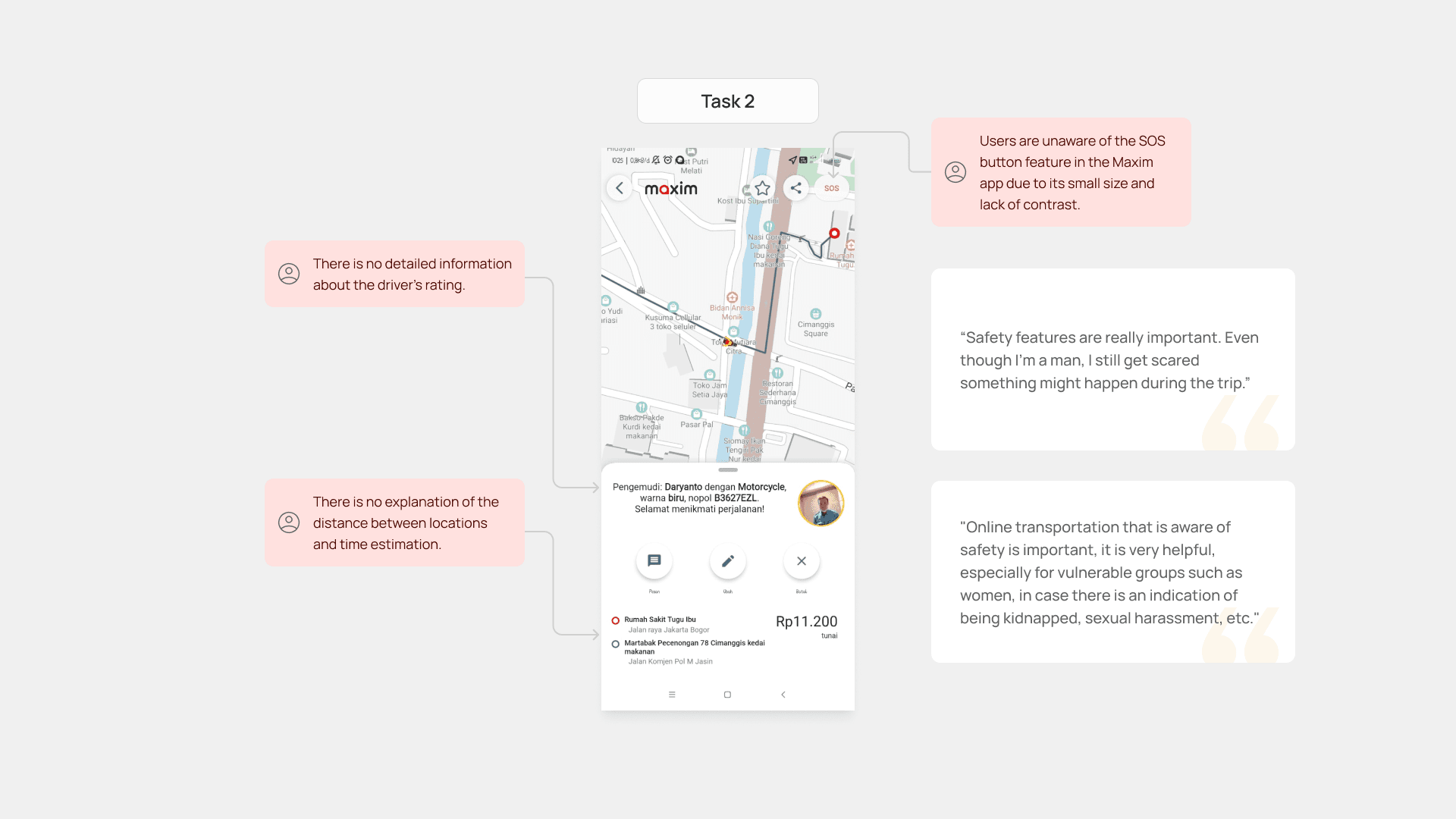
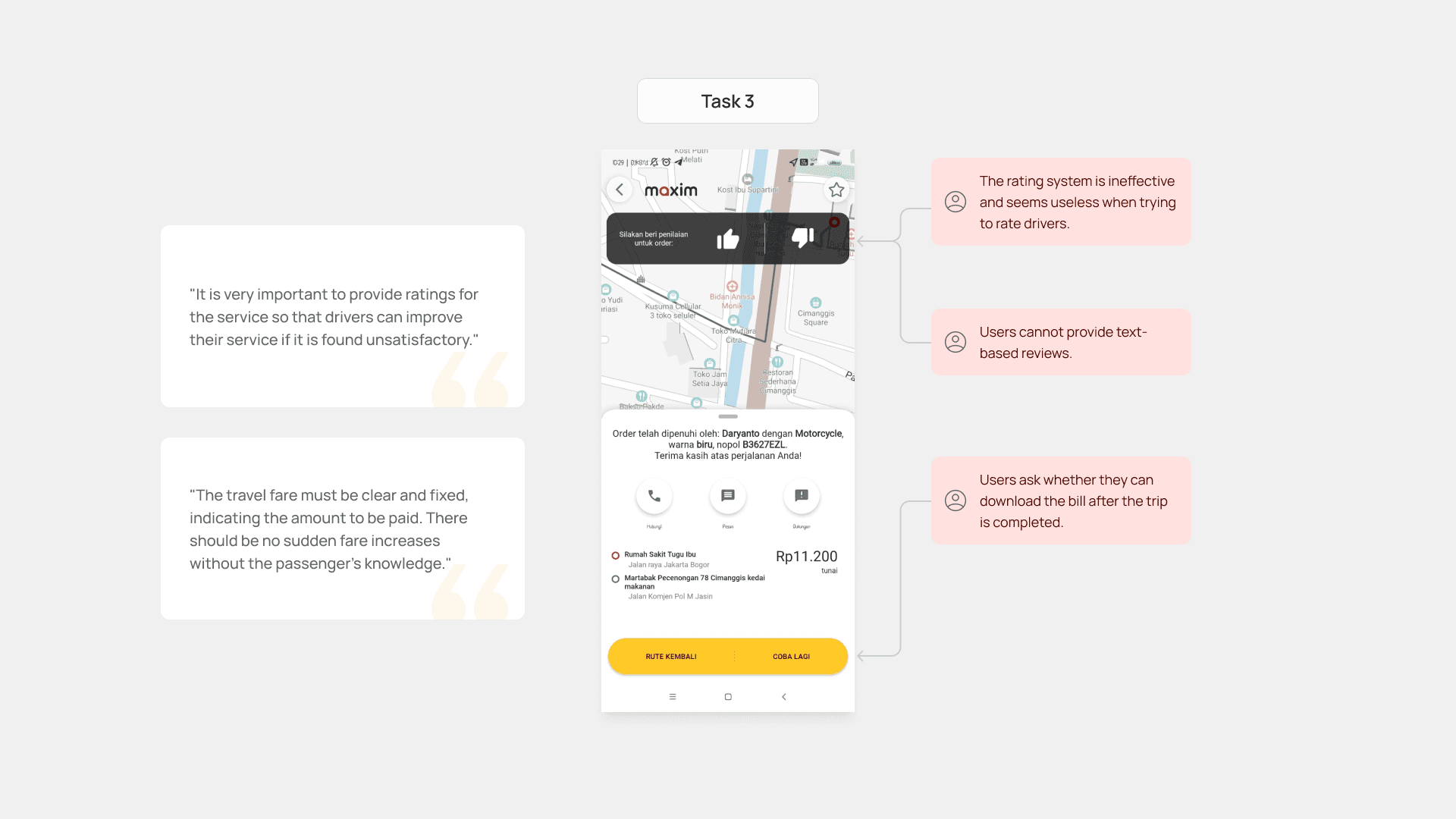
Three tasks were created to understand how users using app, aware about safety measure, and which features need to be improved.
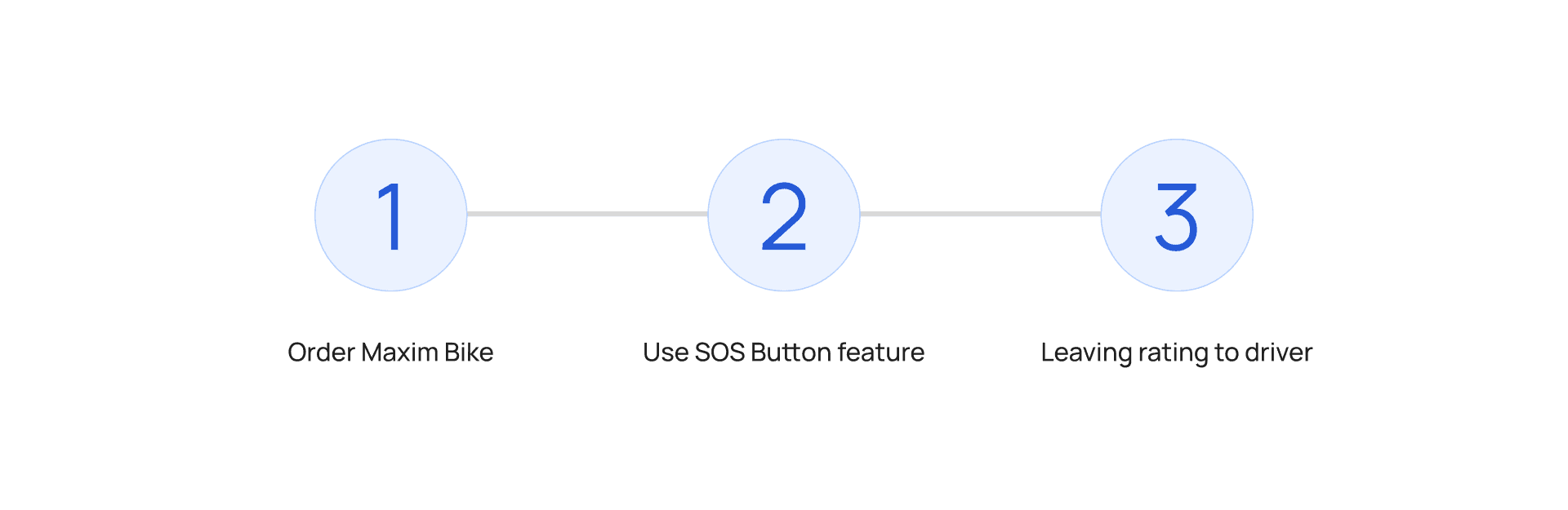
Scenario: Imagine you're using the Maxim app to get from where you are to your destination. But halfway through the ride, you start feeling uneasy because the driver seems to be driving unsafely. You remember there are safety features in the app that you should be aware of. Finally, when you arrive at your destination, you can rate the driver based on your experience.
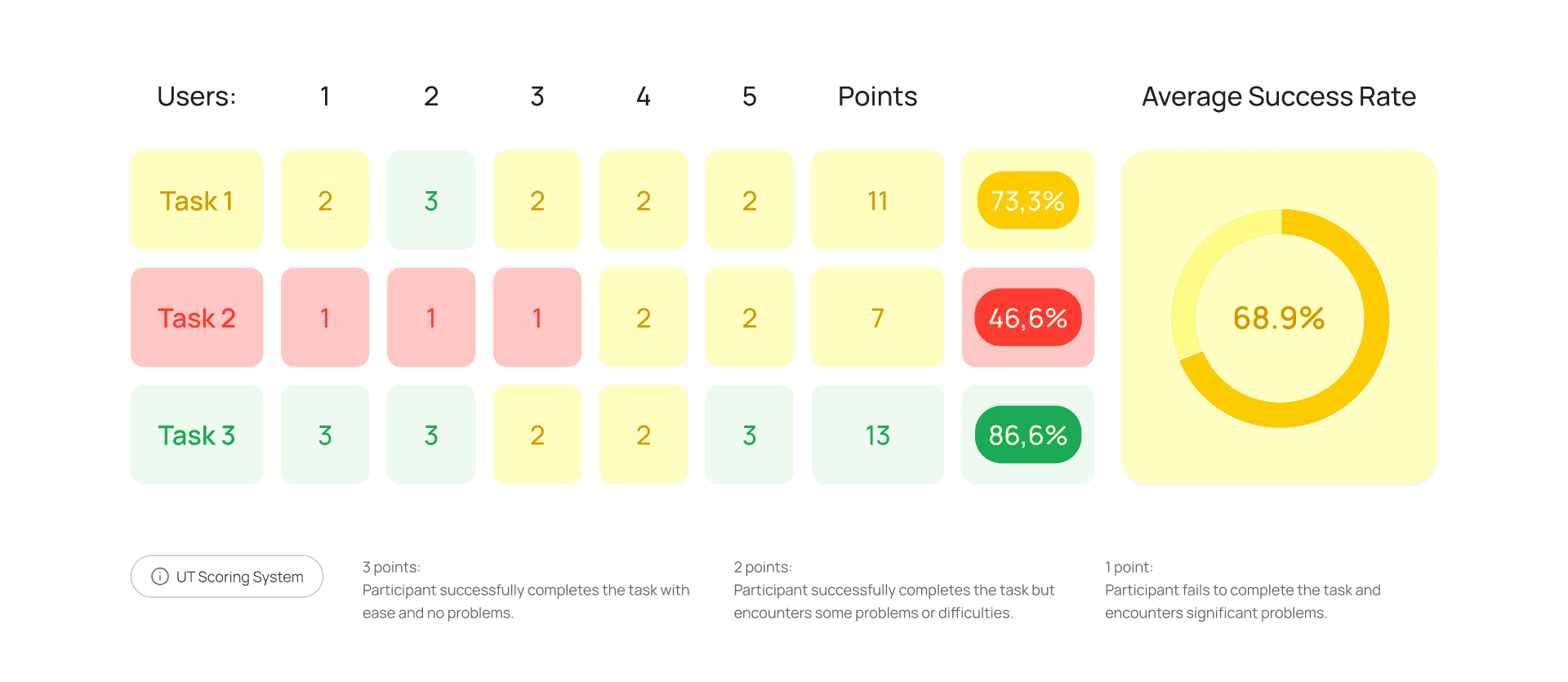
A success rate is a metric that measures how well users perform specific tasks. The average score for a product with good usability is around 80%. However, the result was only 68%, and there were several insights and feedback from users as follows:
Insight & Top Findings
Insight and Top Findings data summarizes the user’s pain points gathered during preliminary usability testing in User Interview.
Define
User Pain Points and Expectations
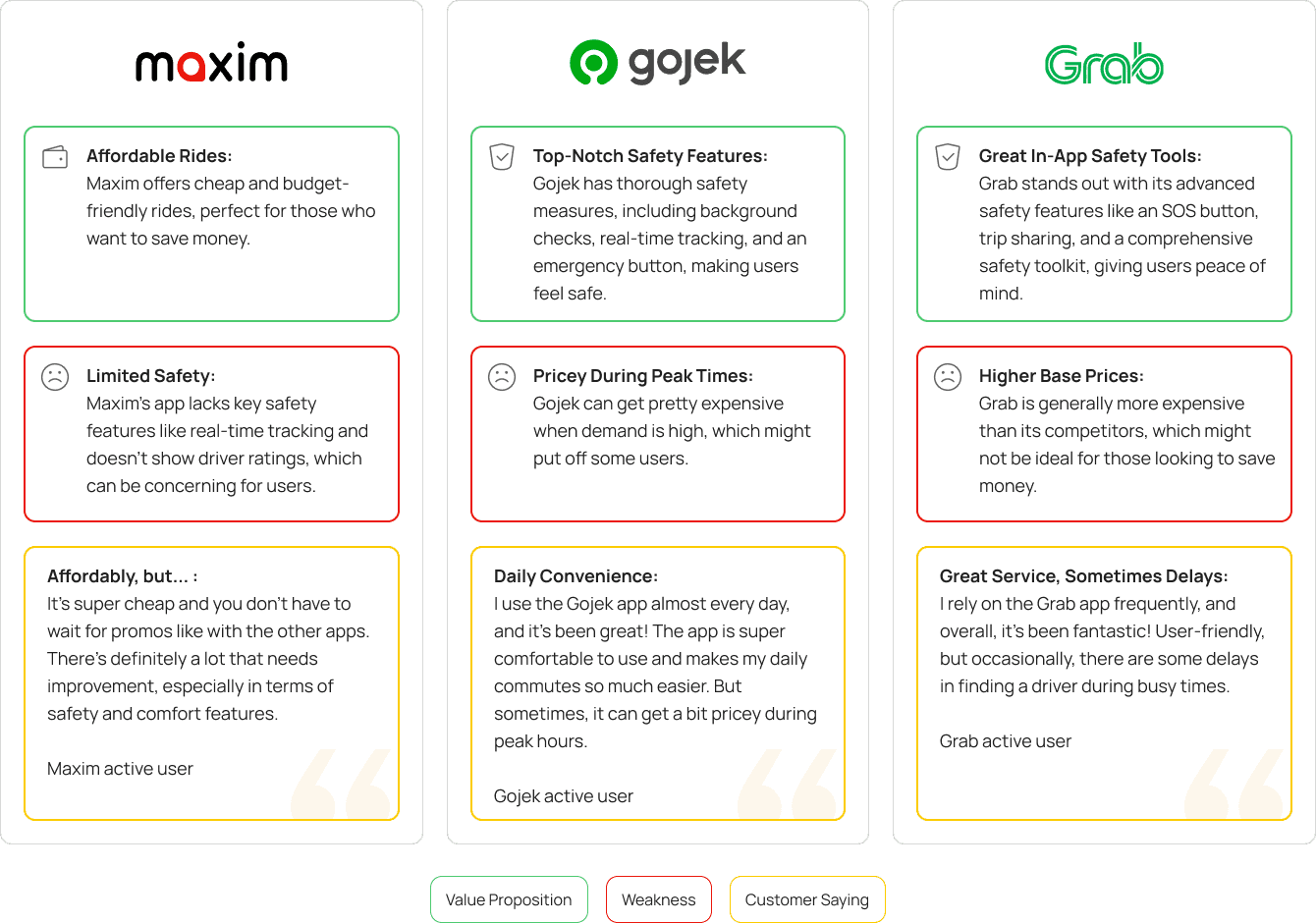
Competitive Analysis
Understanding the value proposition, customer saying, and weaknesses of Maxim, Gojek, and Grab to identify opportunities for improvement and differentiation.
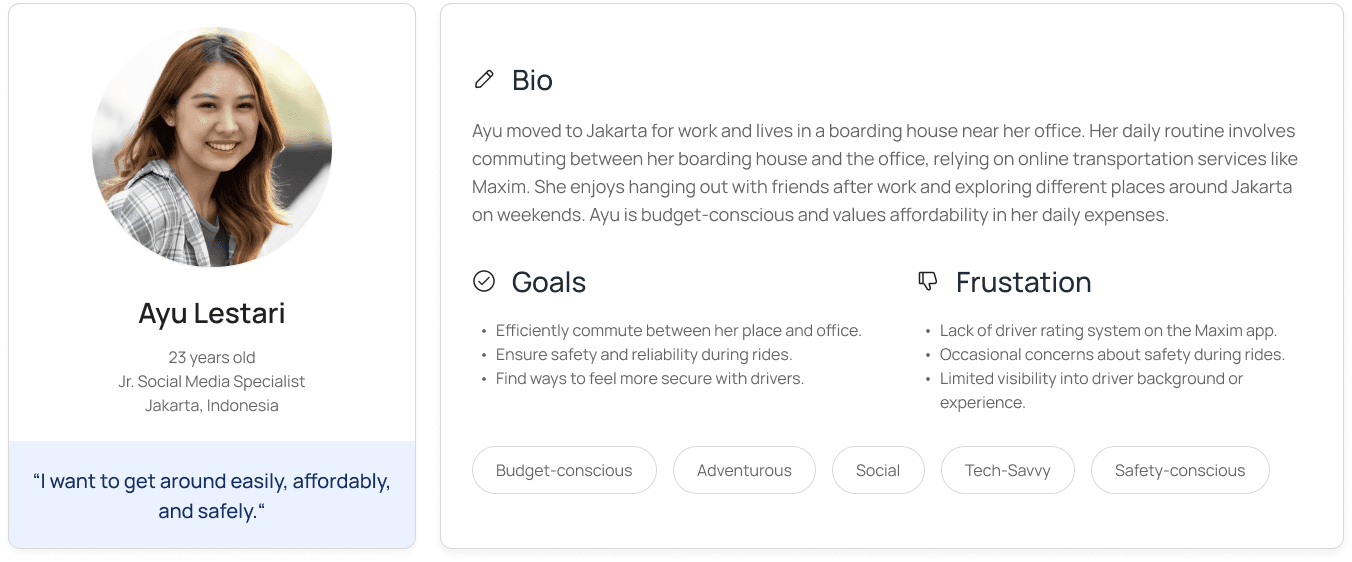
User Persona
A user persona is built based on interview data as a representation of participants.
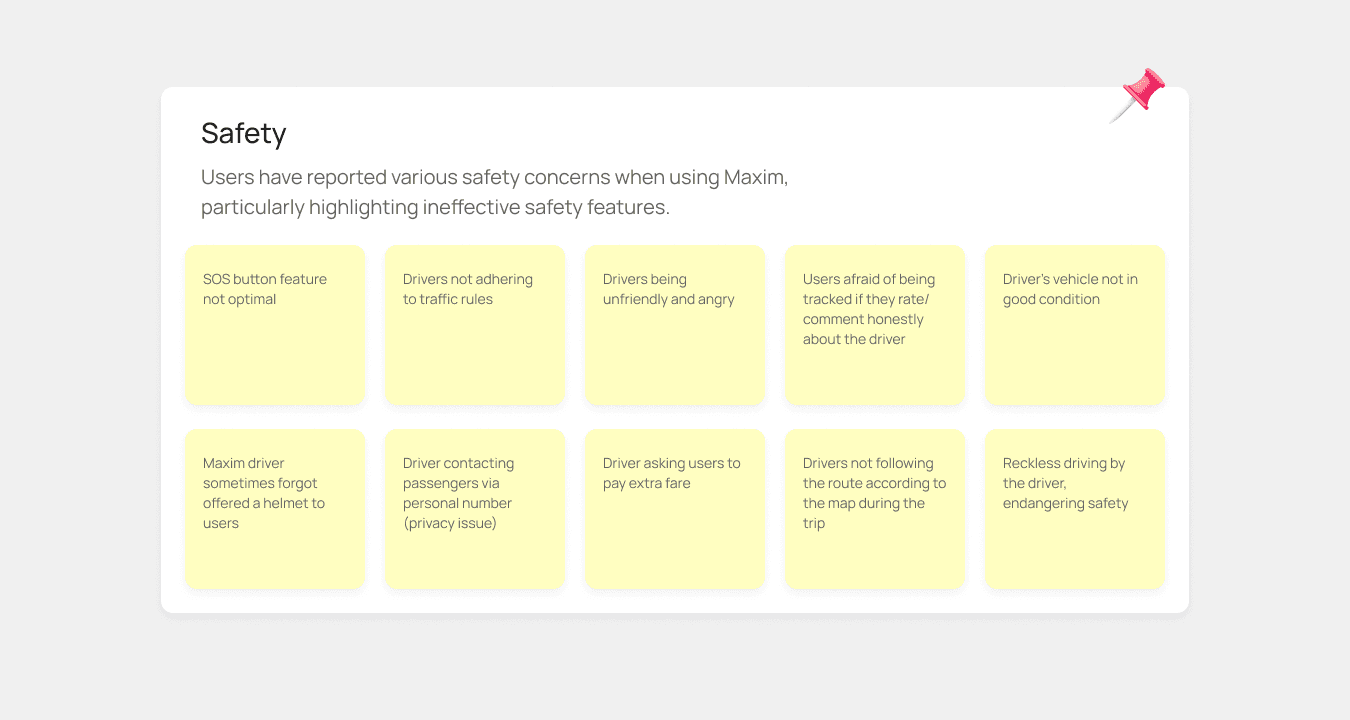
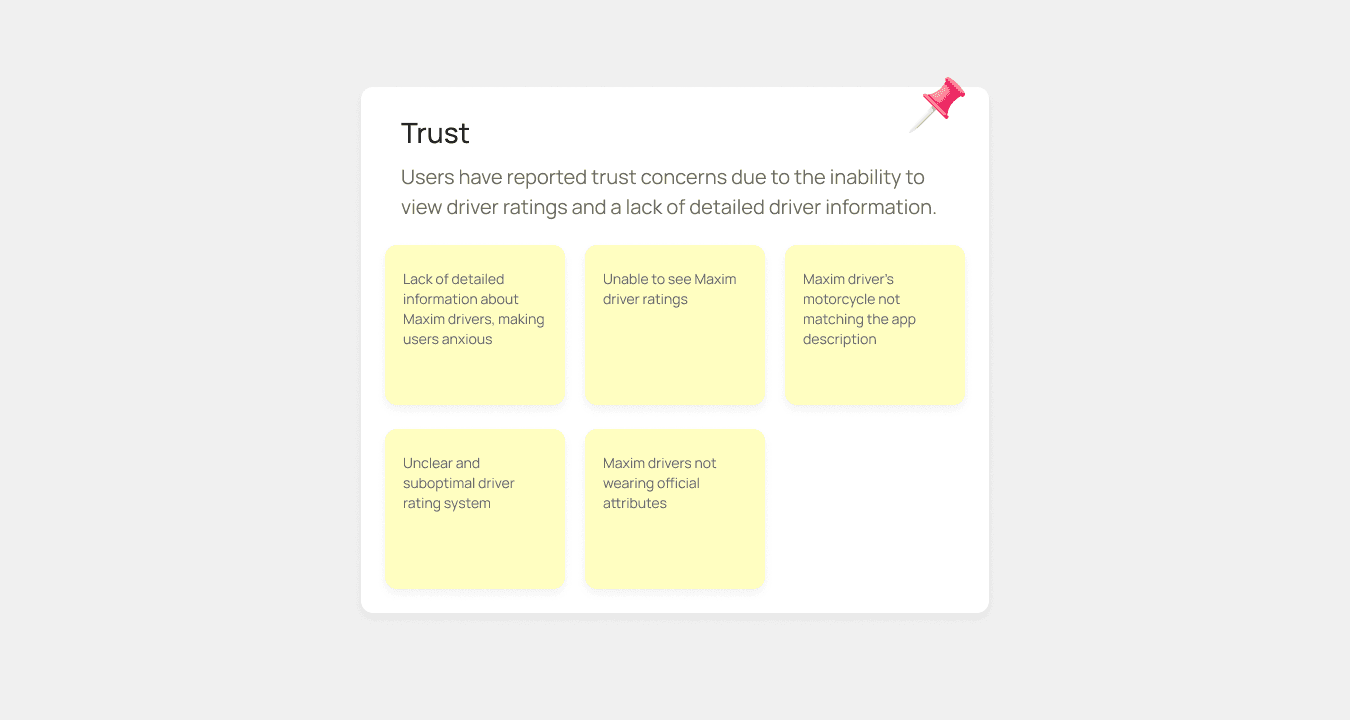
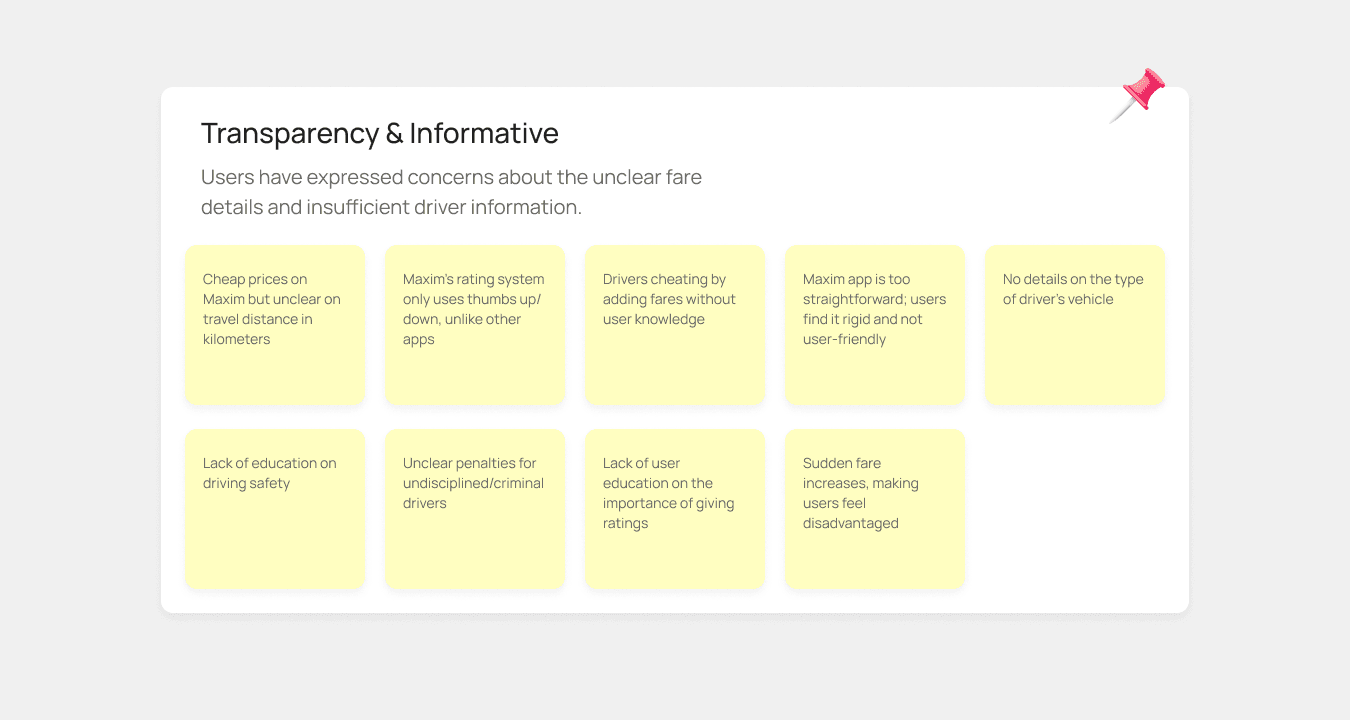
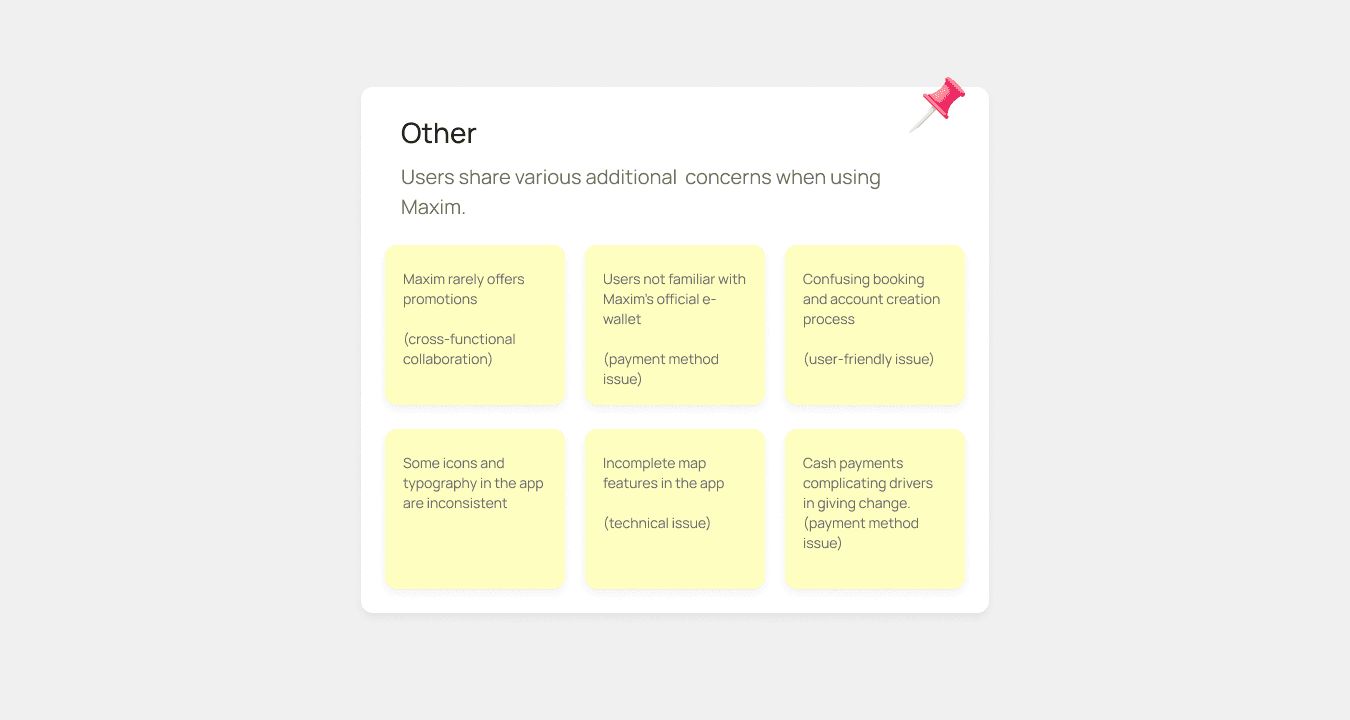
Affinity Mapping
The goal of User Interview and Online Hearing was to understand the users' pain points when using online transportation apps, especially Maxim.
Ideate
Brainstorming of Potential Solutions
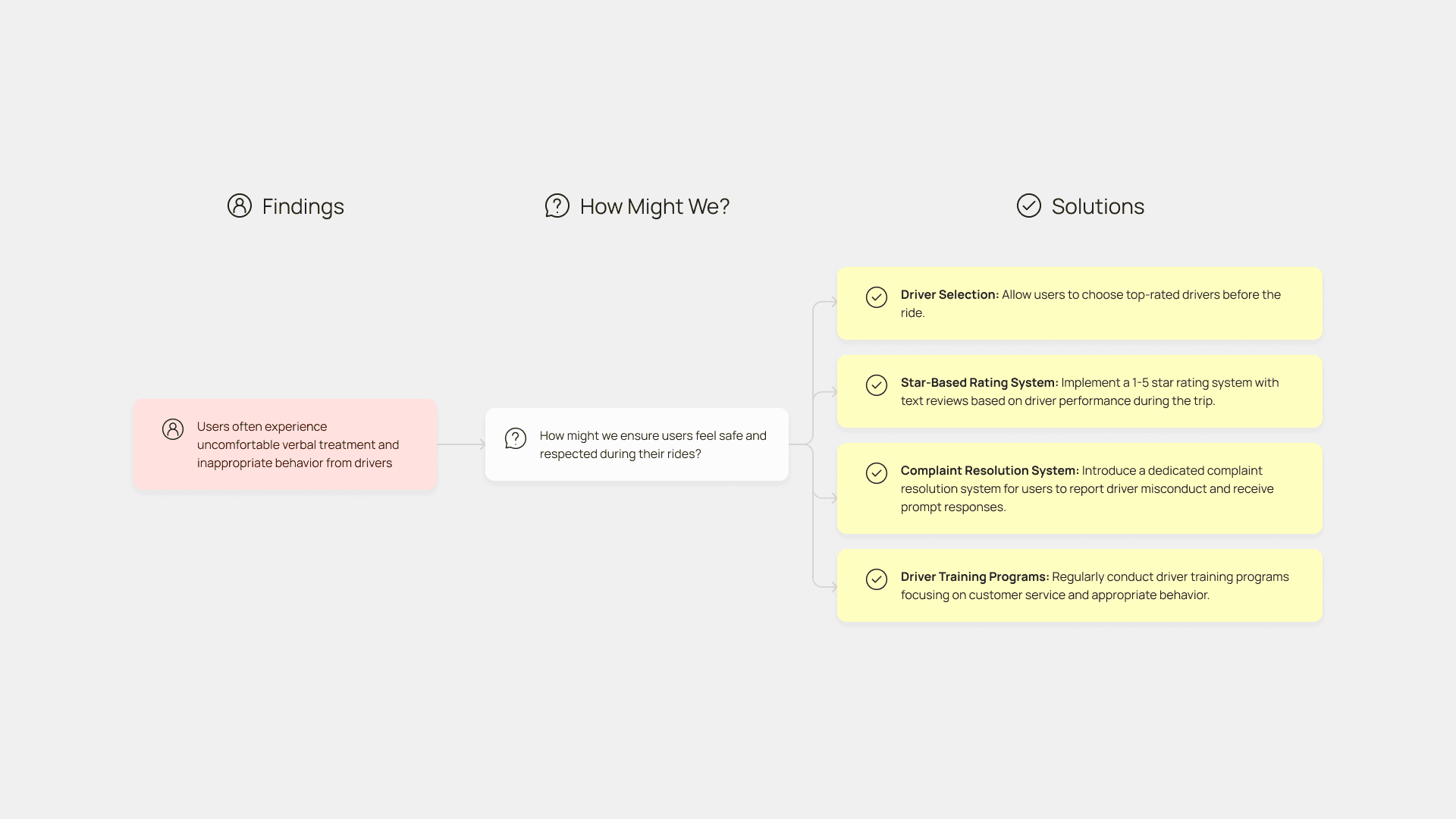
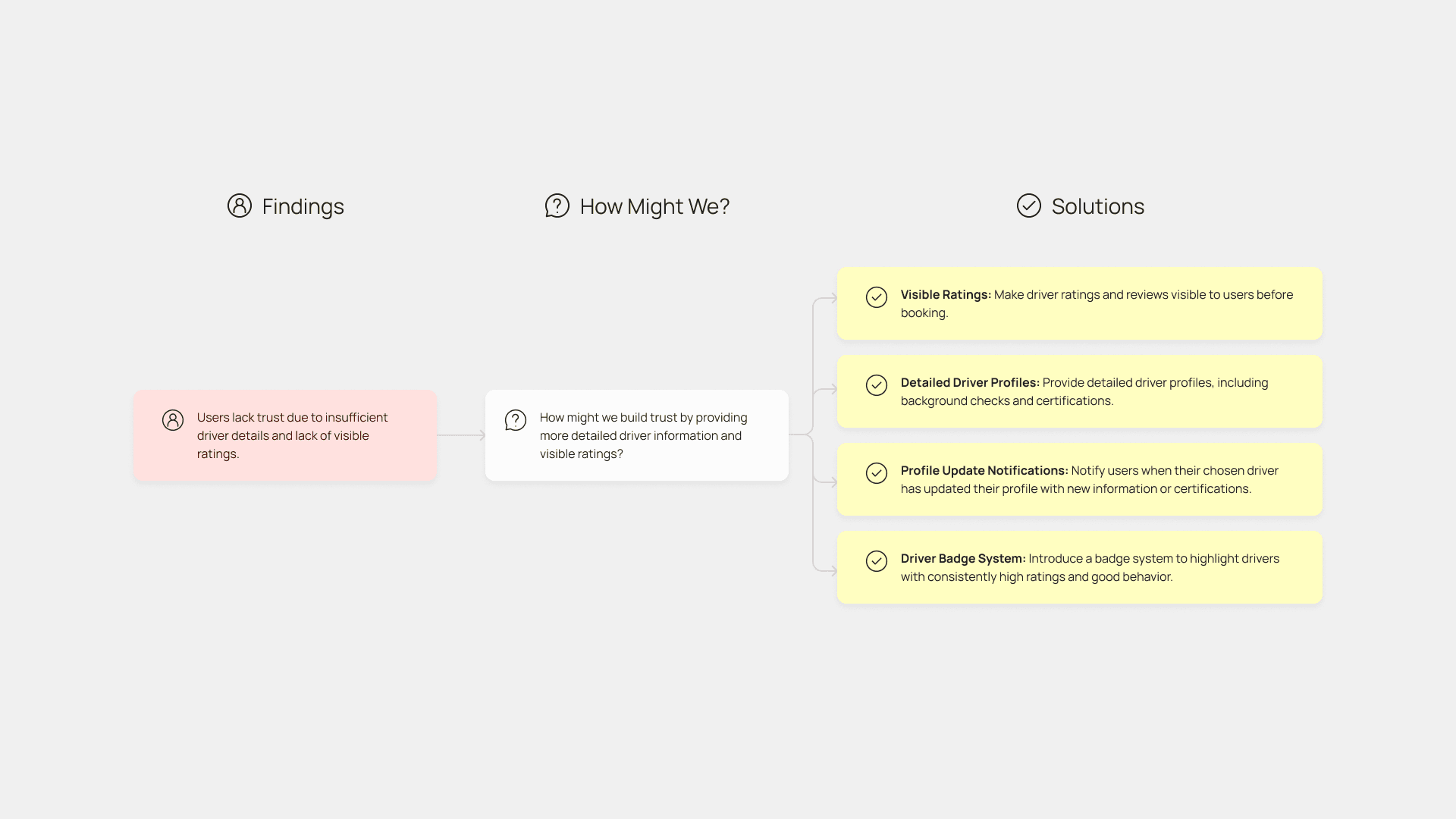
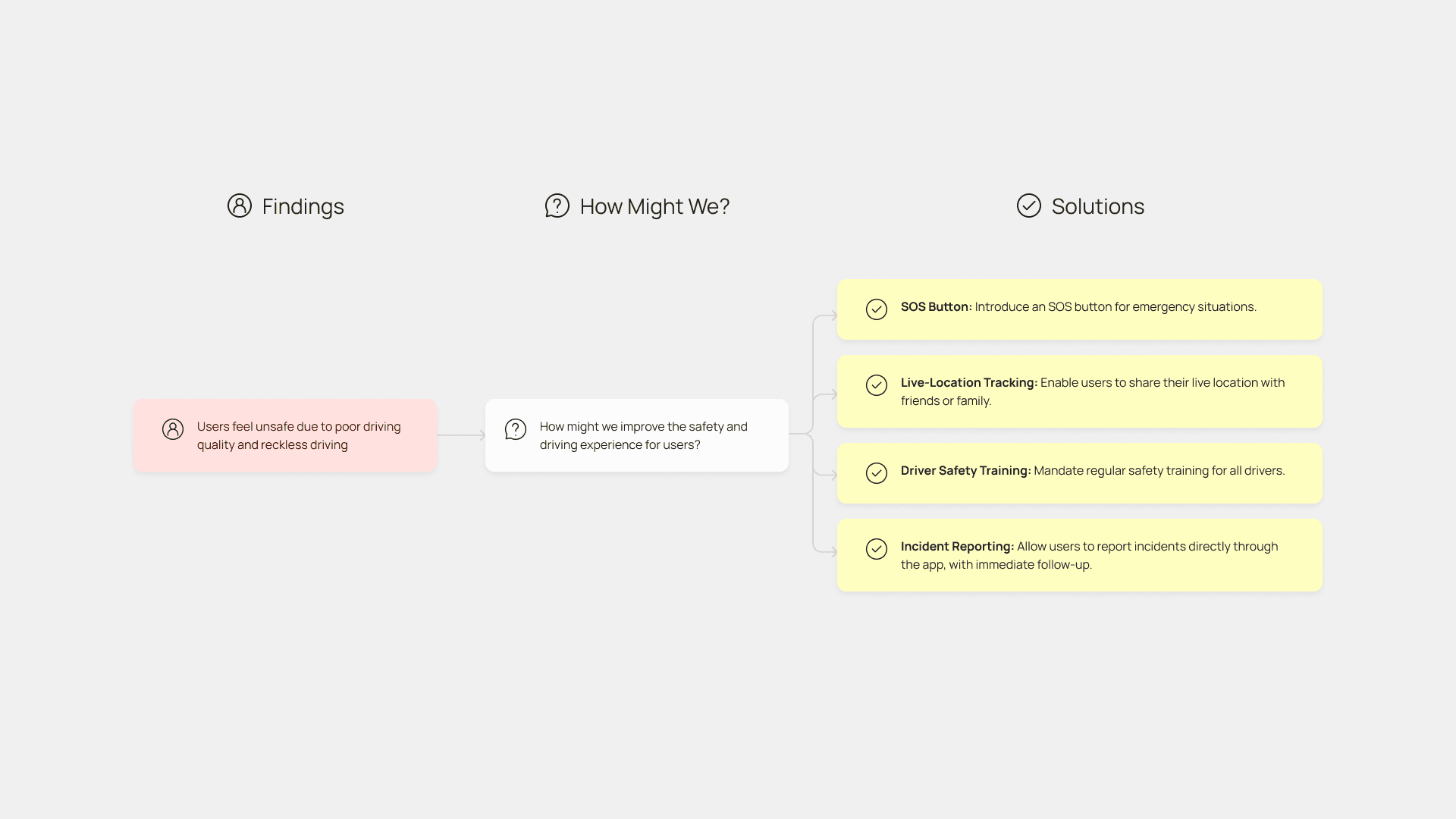
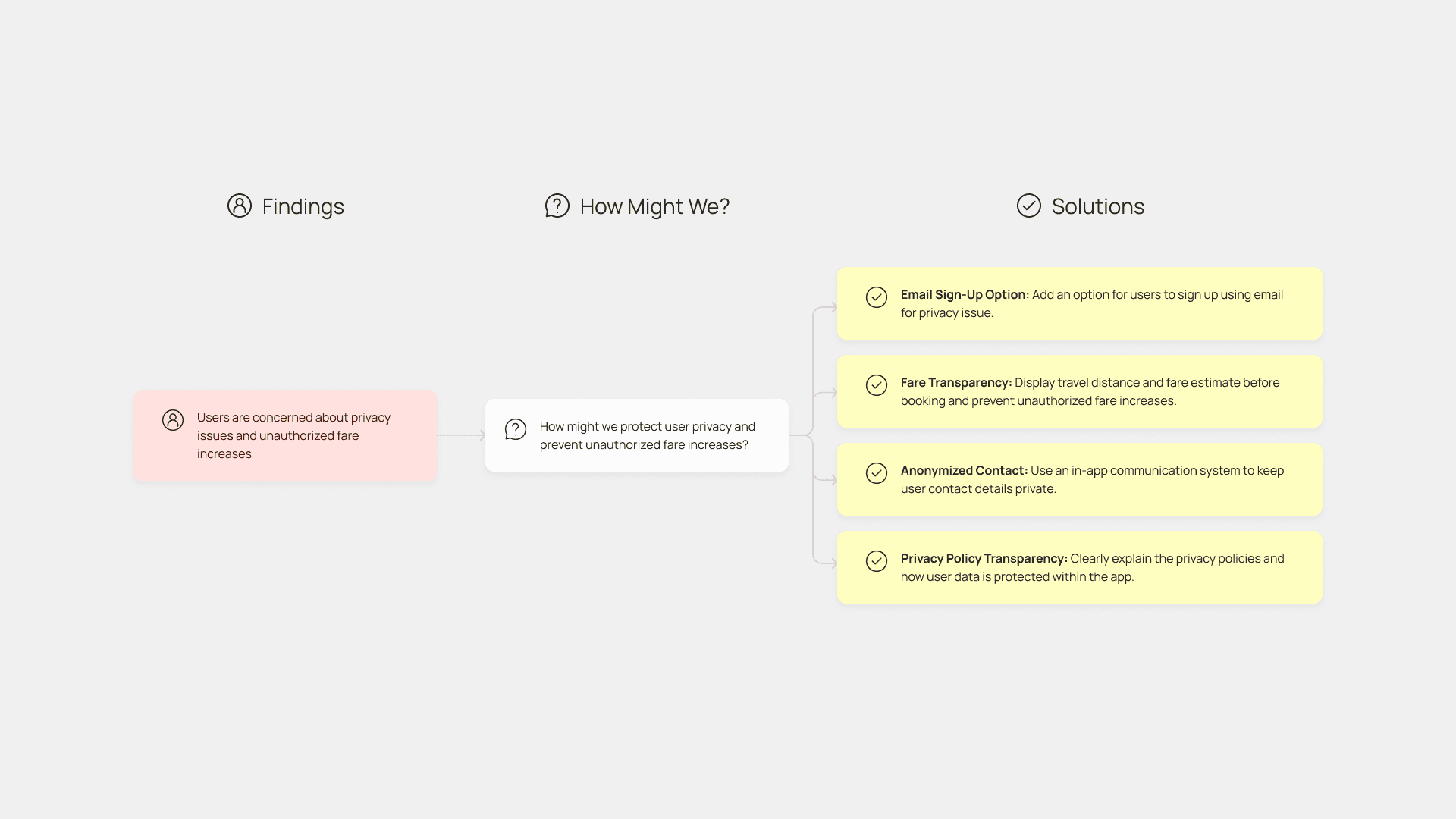
In this section, I am crafting potential solutions using the "How Might We?" framework, based on insights and findings gathered from the research process.
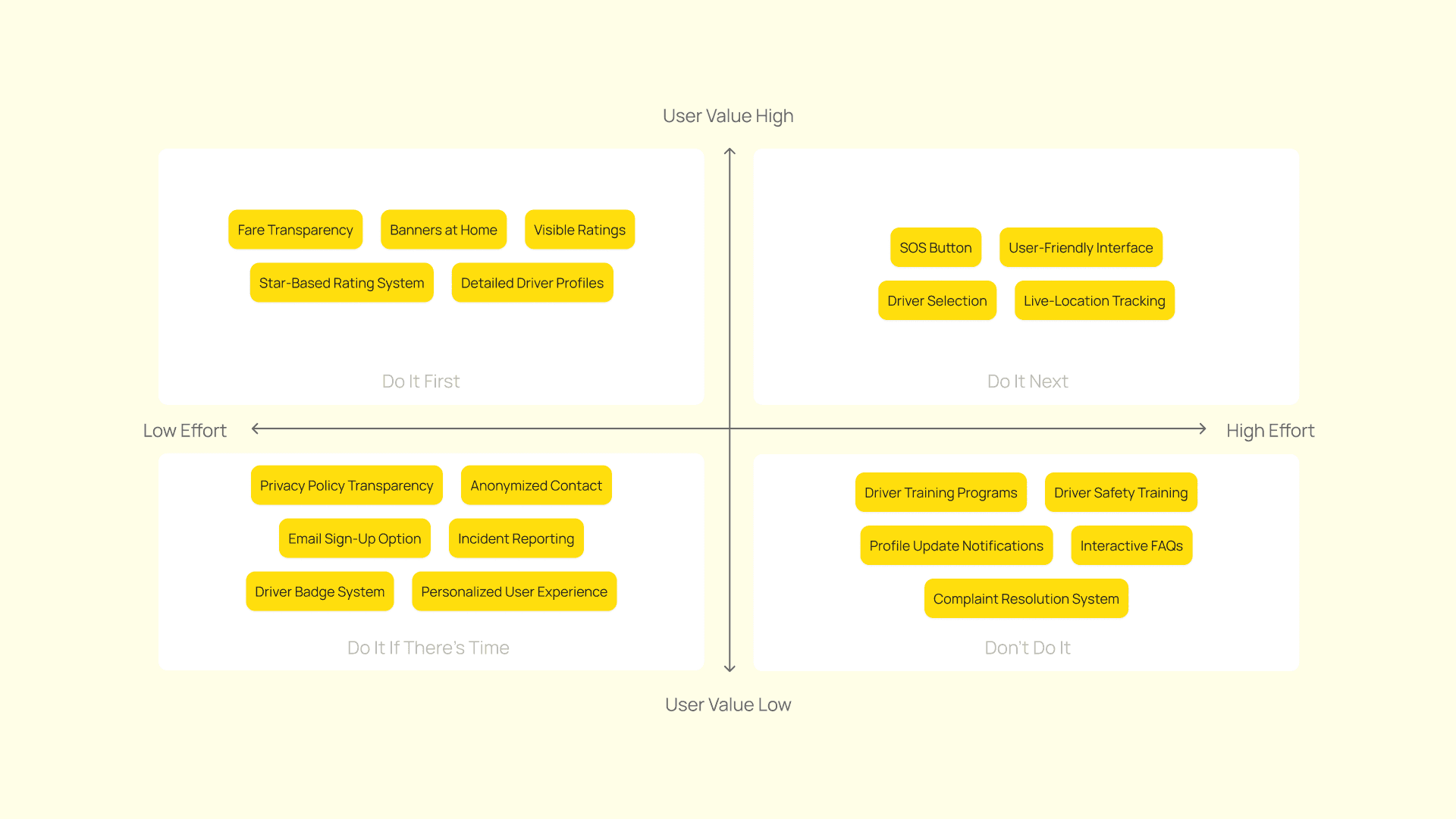
The Priority Matrix helps to focus on the most important tasks and allocate resources effectively, ensuring that my efforts are directed toward potential solutions that align with project goals and desired outcomes.
The User Flow outlines the steps users take, from signing up to completing an order, ensuring a seamless experience that aligns with their needs and efficiently leads to the order summary in Maxim.
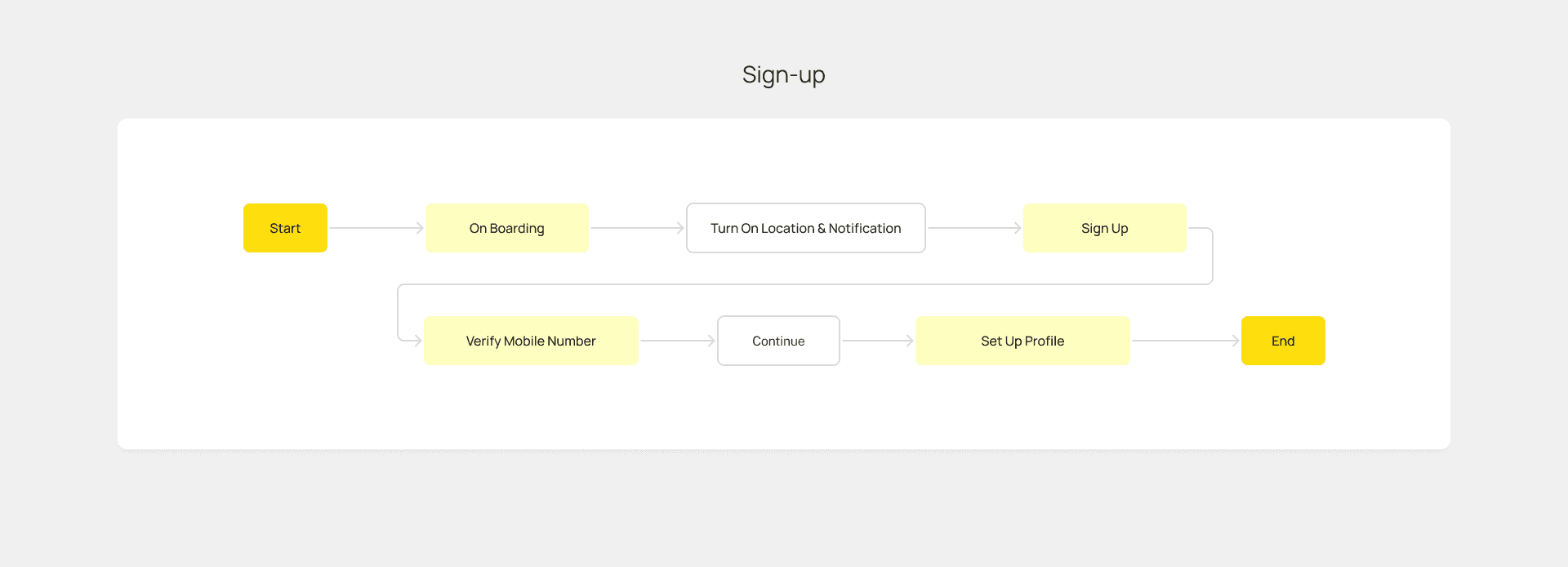
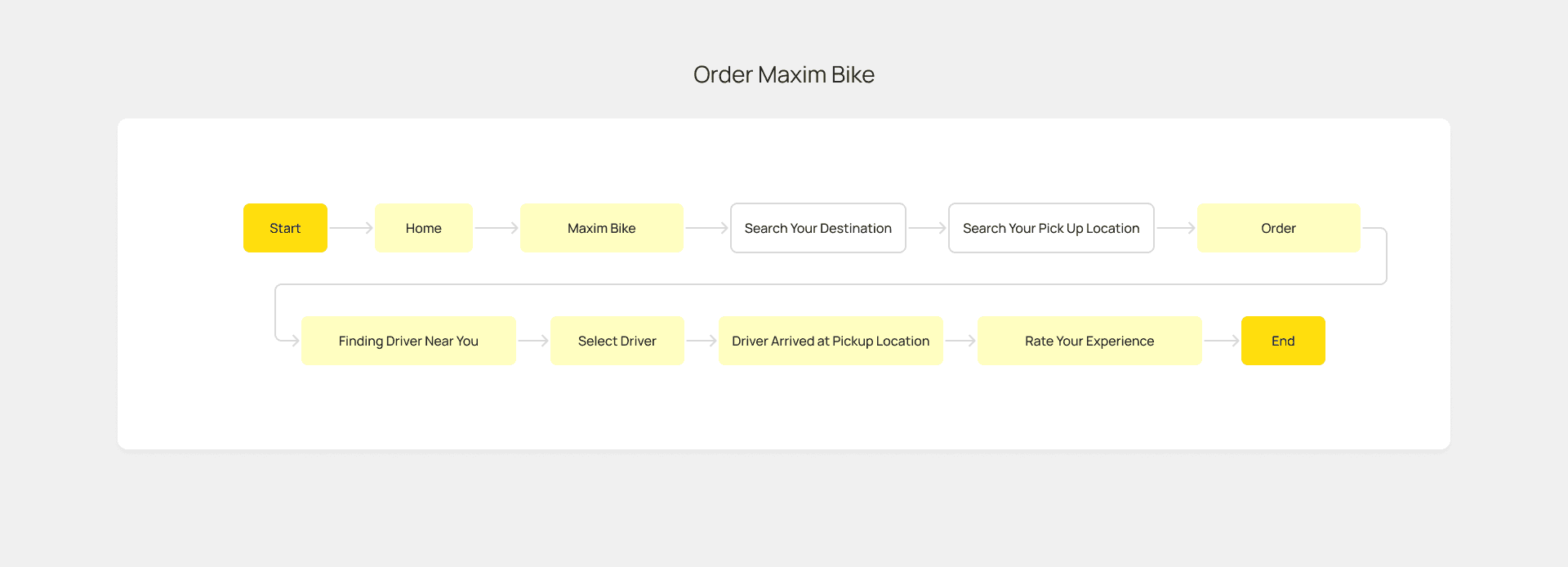
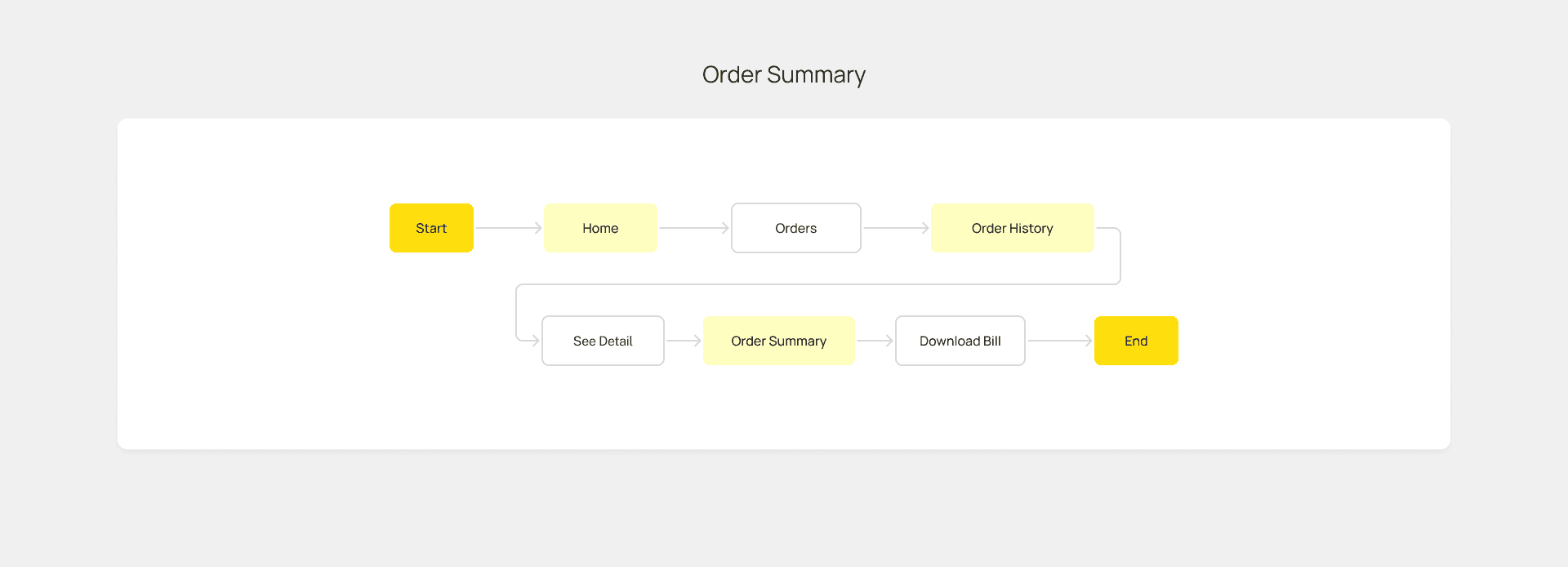
Legend:
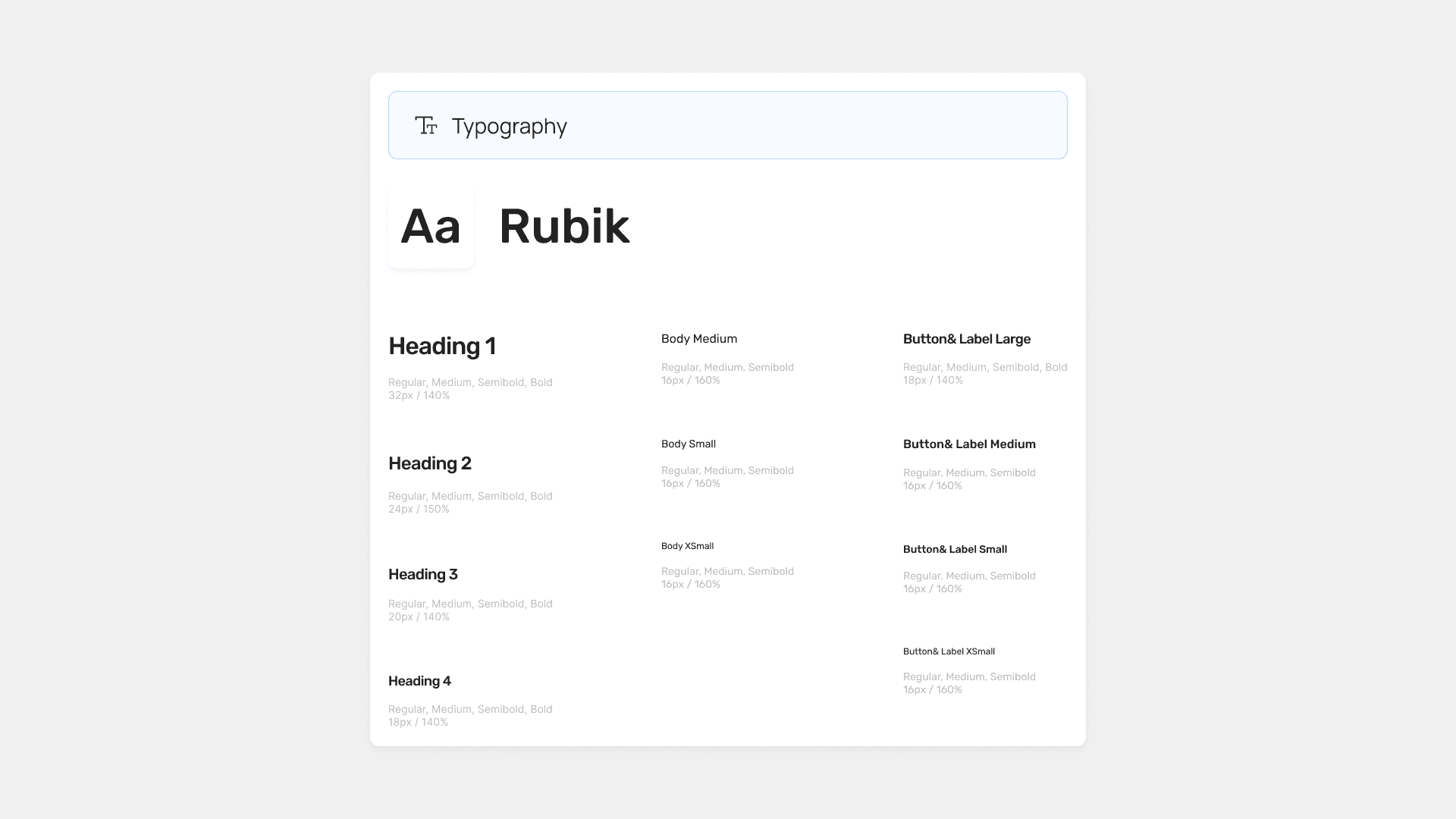
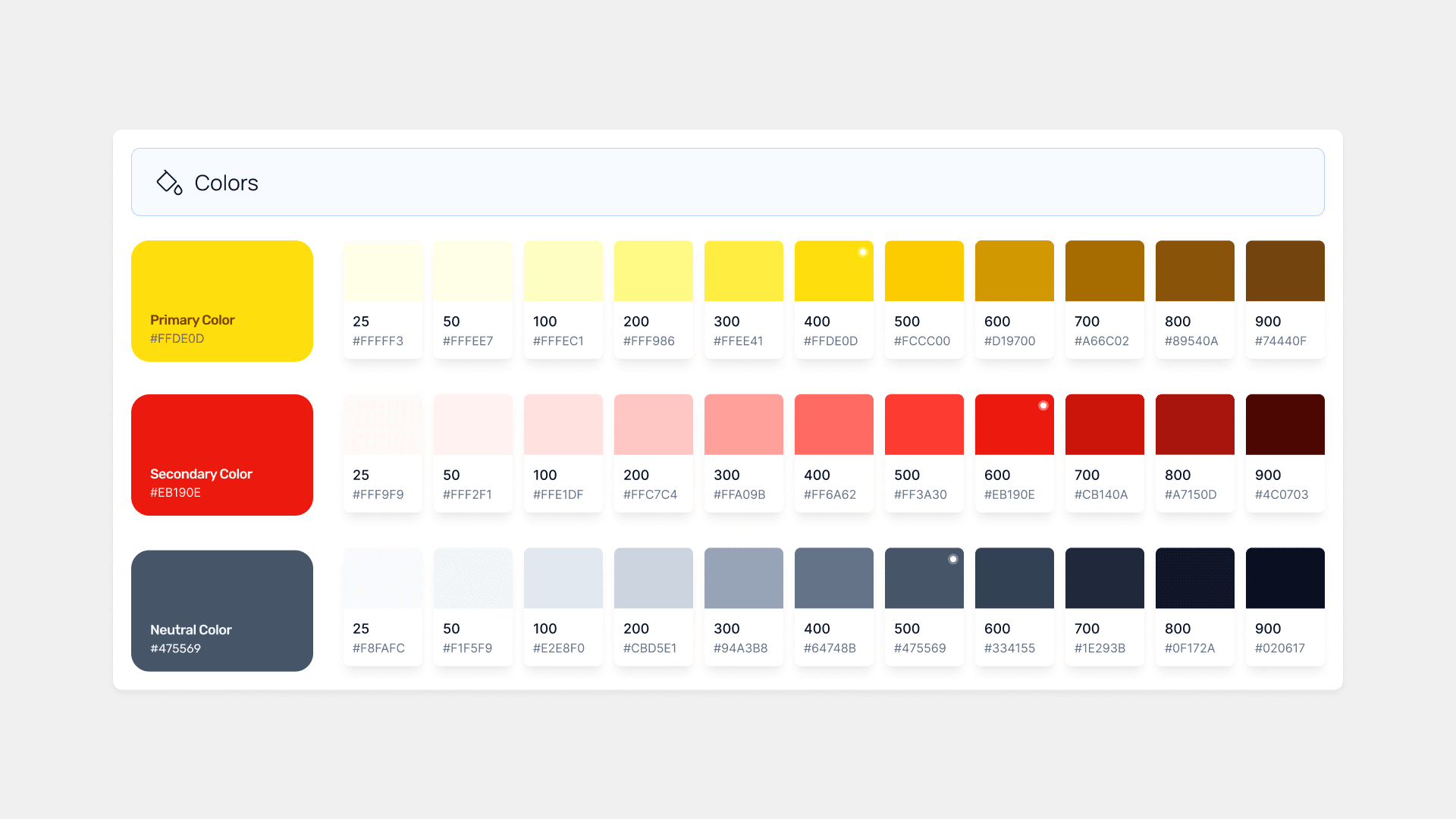
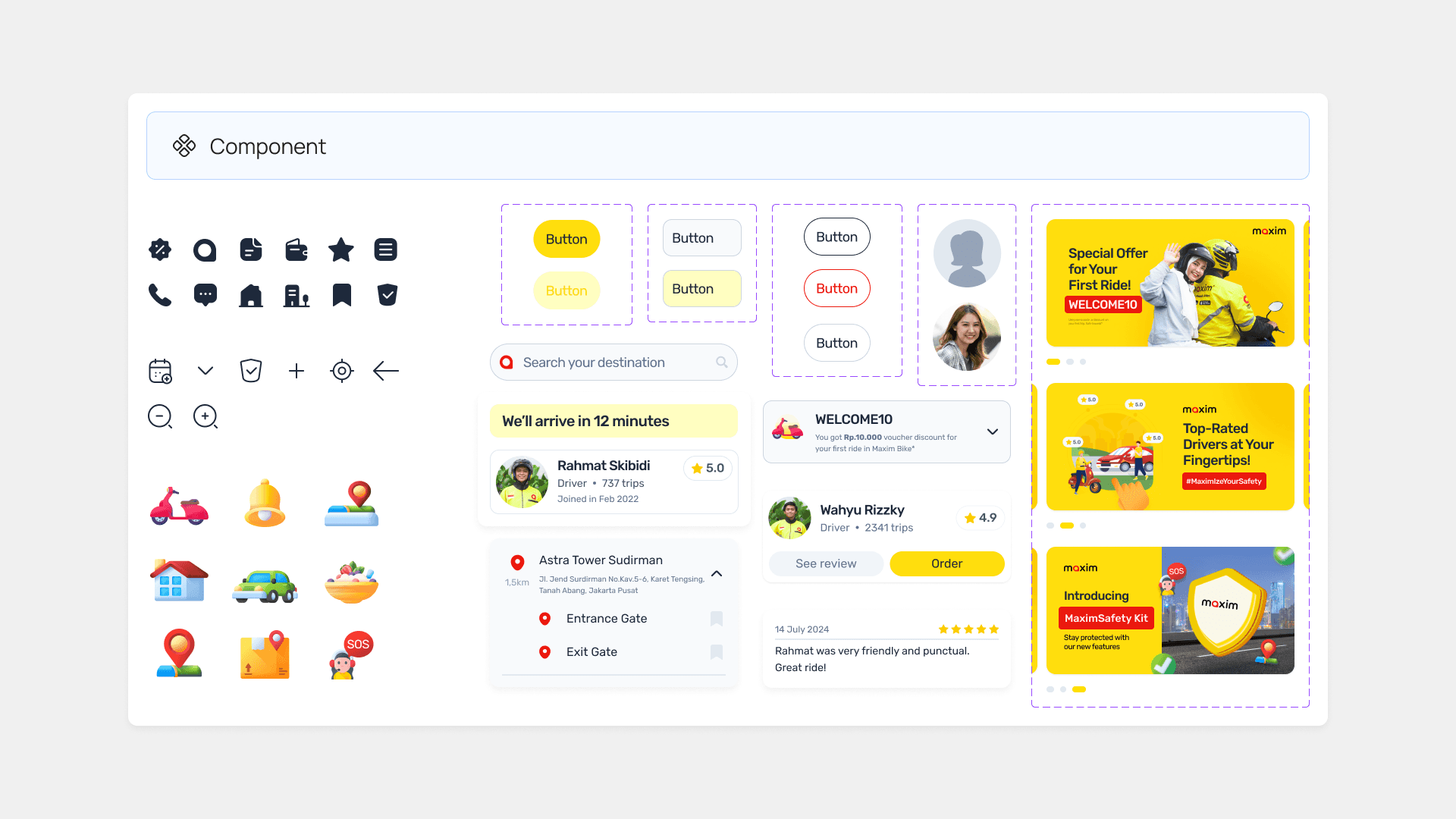
UI Style Guide
A Comprehensive Resource for UI Designers and Developers
Maximize Your Safety
Trust as the New Currency
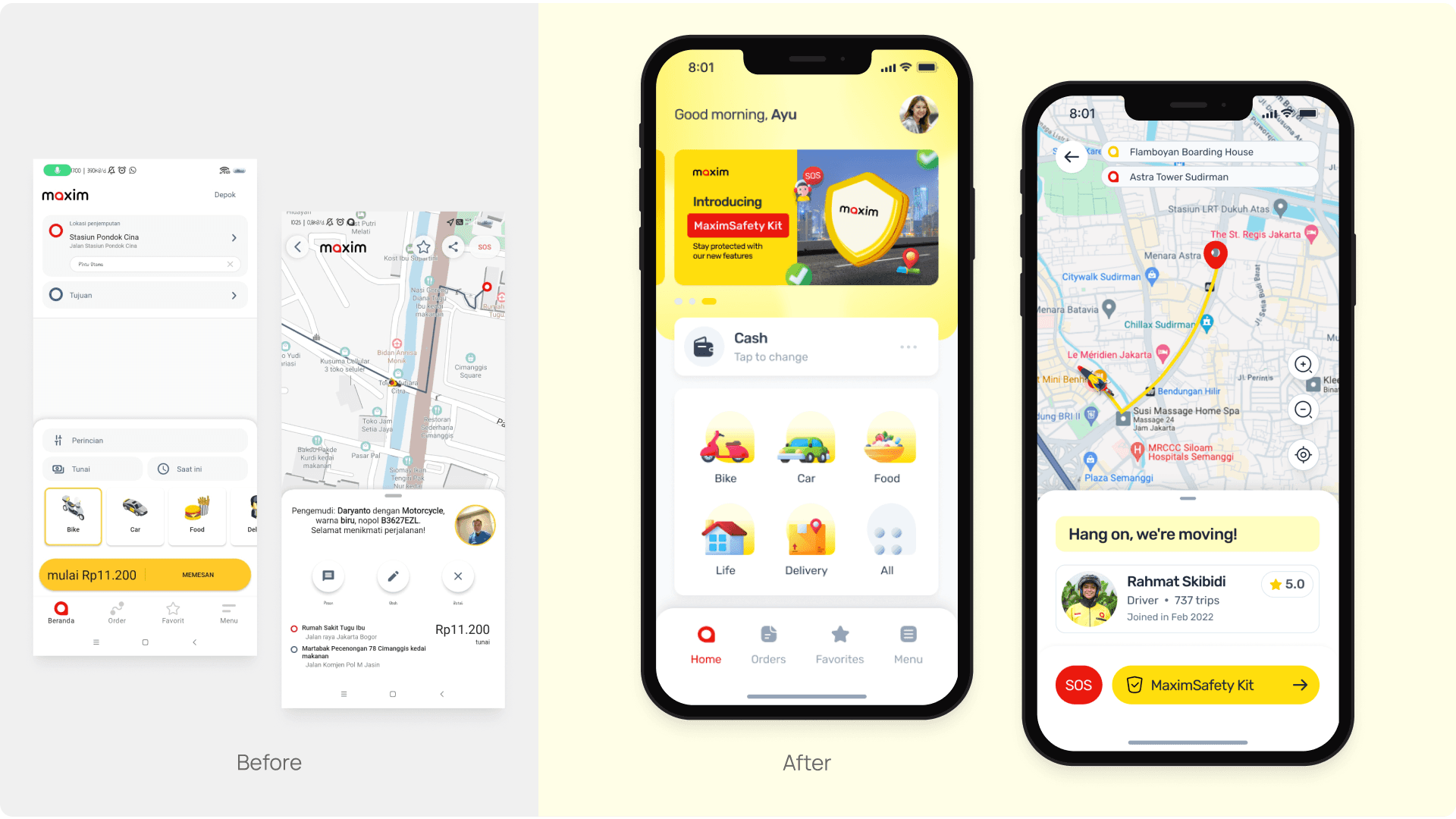
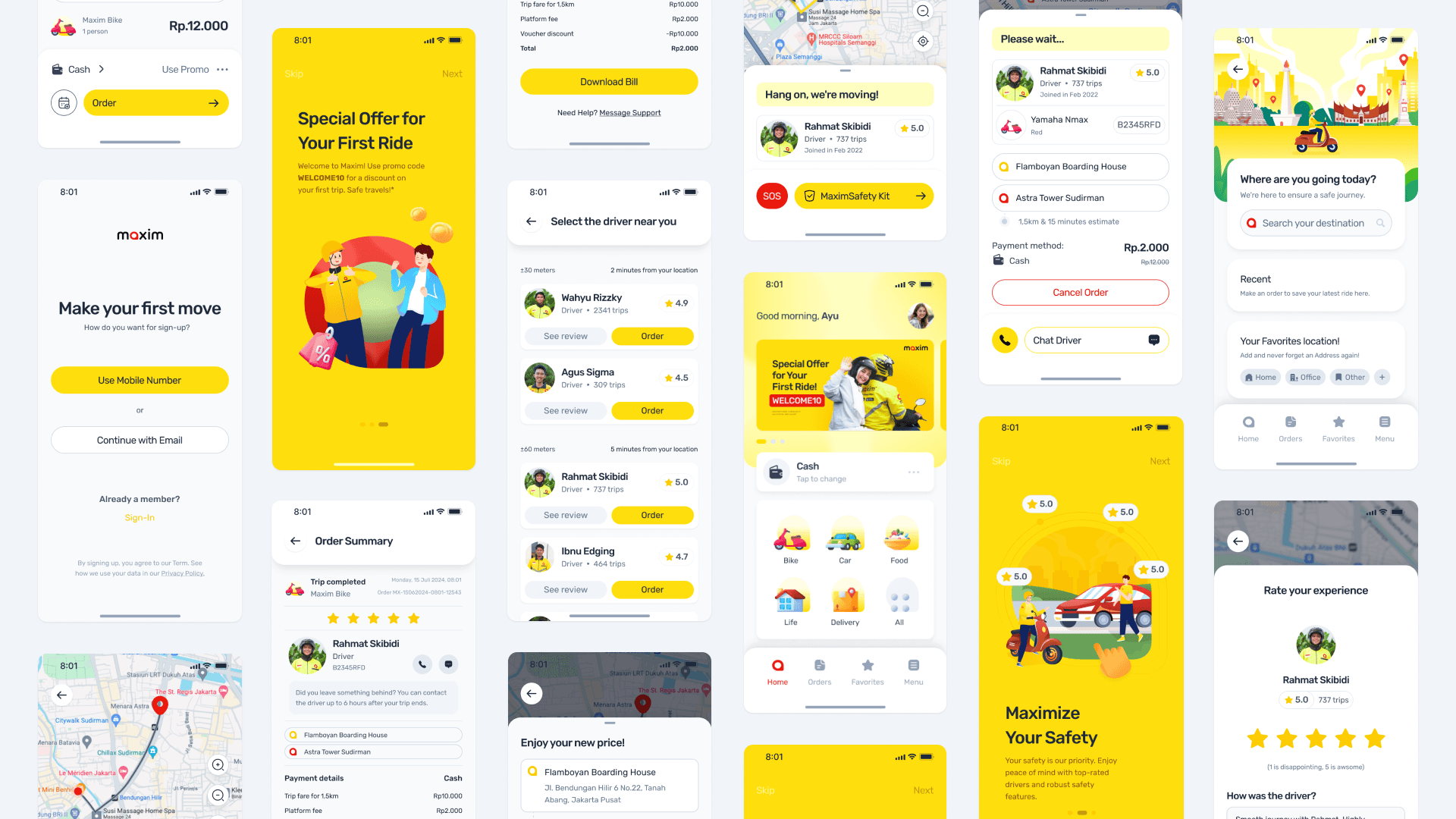
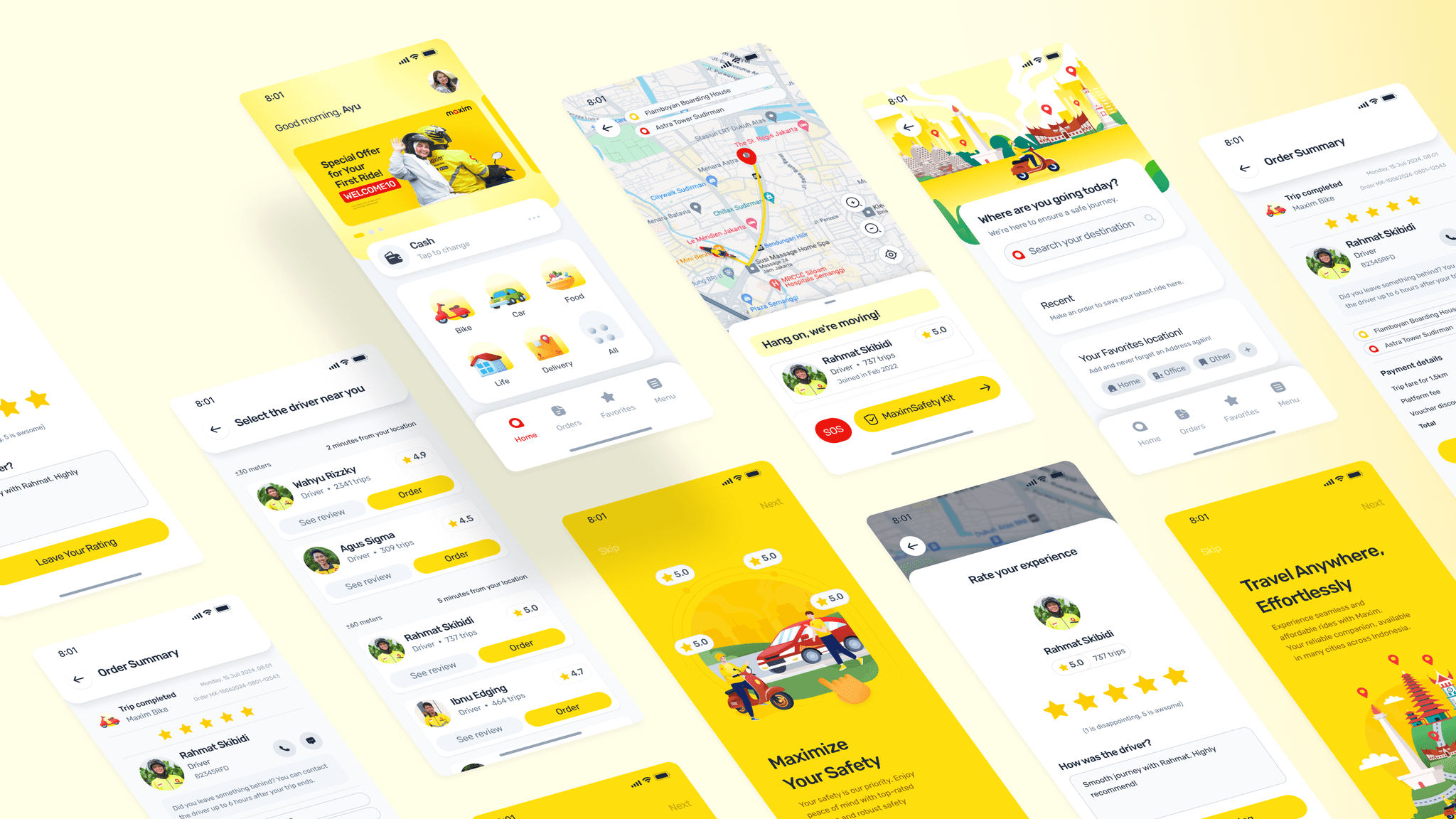
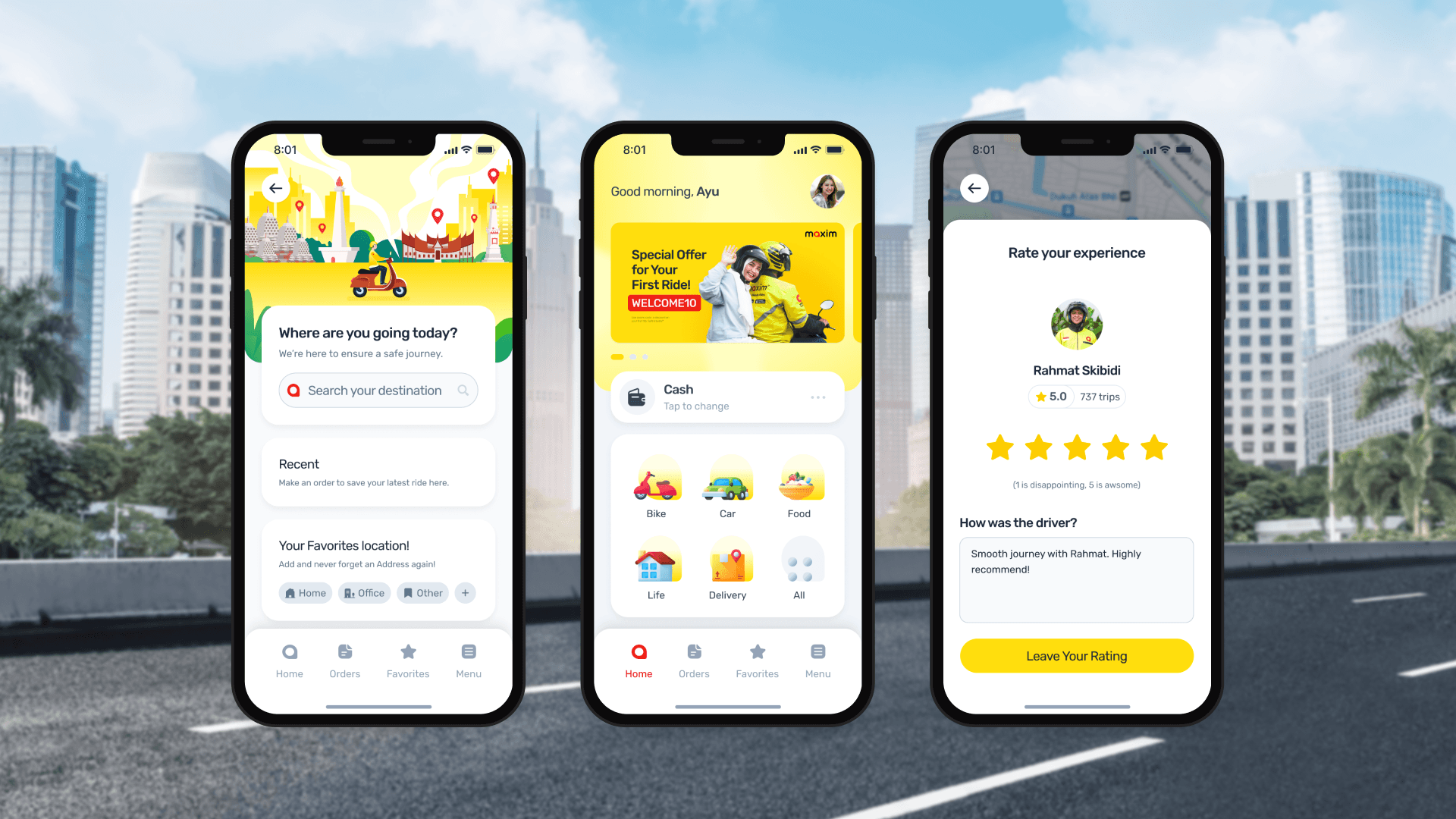
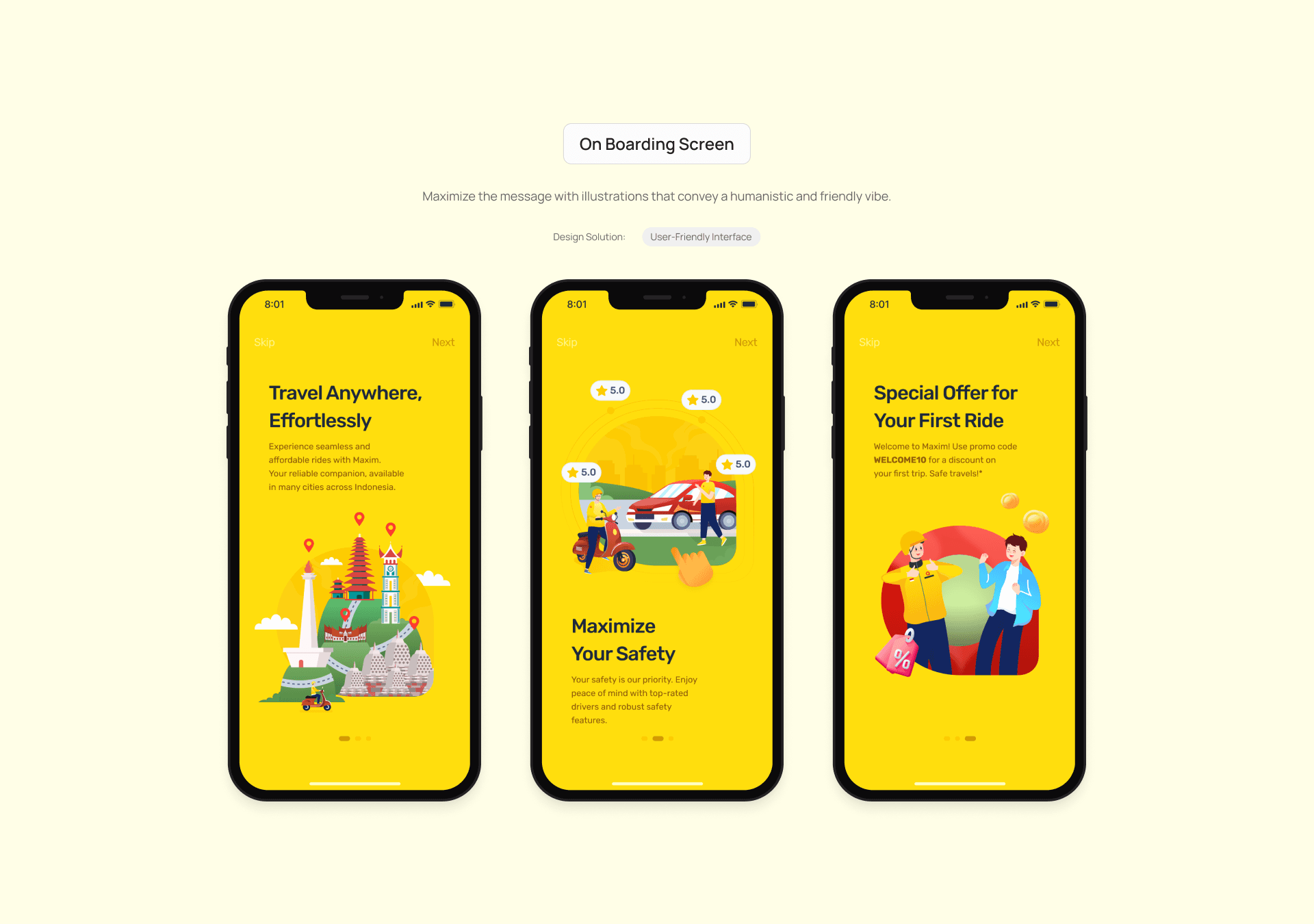
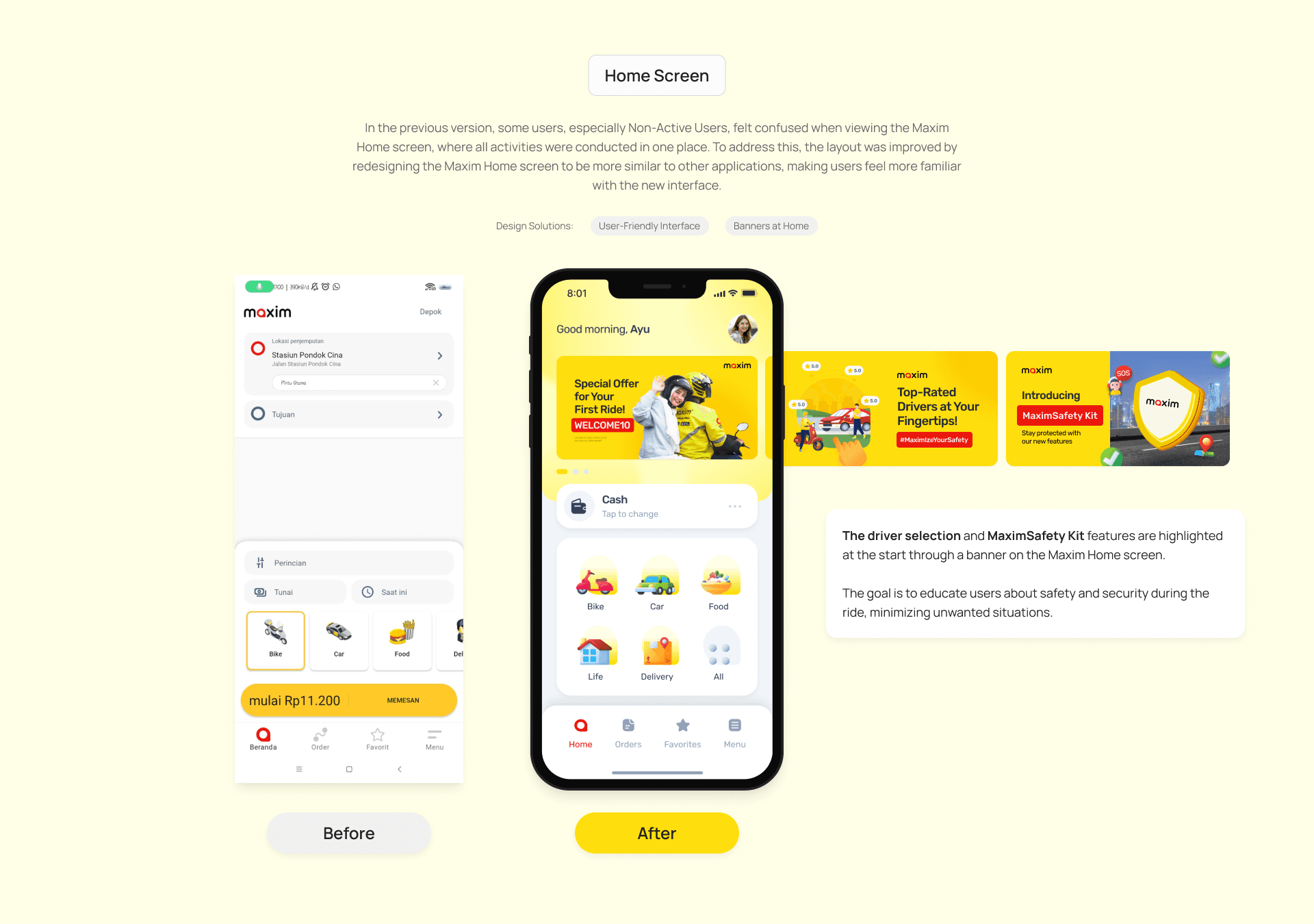
With the research insights in hand, I developed key solutions to address the identified pain points. The most impactful solution was a new driver selection feature, allowing users to view driver ratings and choose their driver before booking a ride.
Additionally, I introduced the MaximSafety Kit, a security solution designed for users during their trip. This kit optimizes the existing SOS button feature and adds a new capability for users to send live-location tracking to their family.
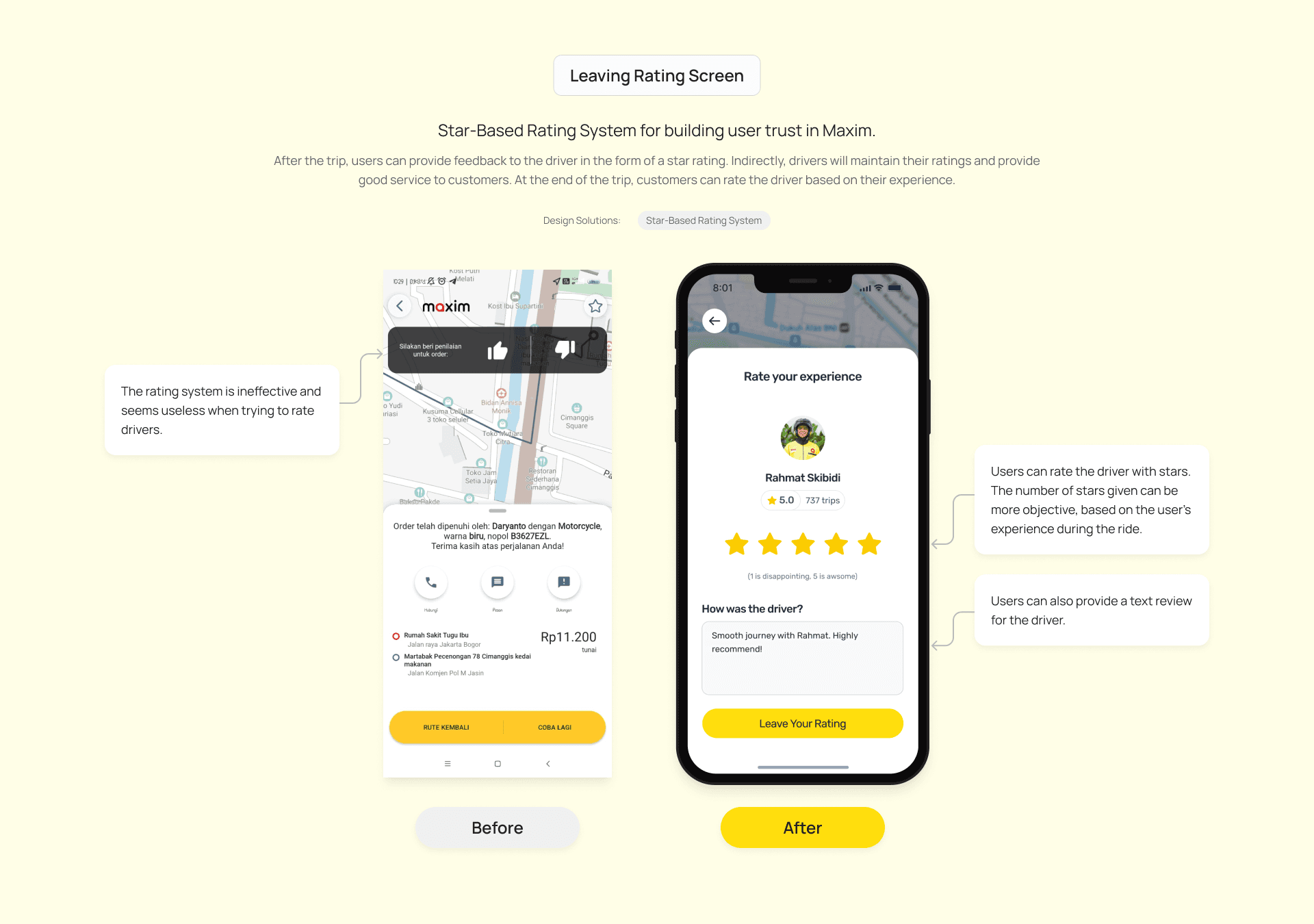
After the trip, users can provide feedback to the driver through a Star-Based Rating System. This system not only allows for rating drivers but also acts as a security feature post-trip, enhancing user trust in Maxim. As a result, drivers are motivated to maintain their ratings and deliver good service, knowing that customers can rate their experience at the end of each ride.
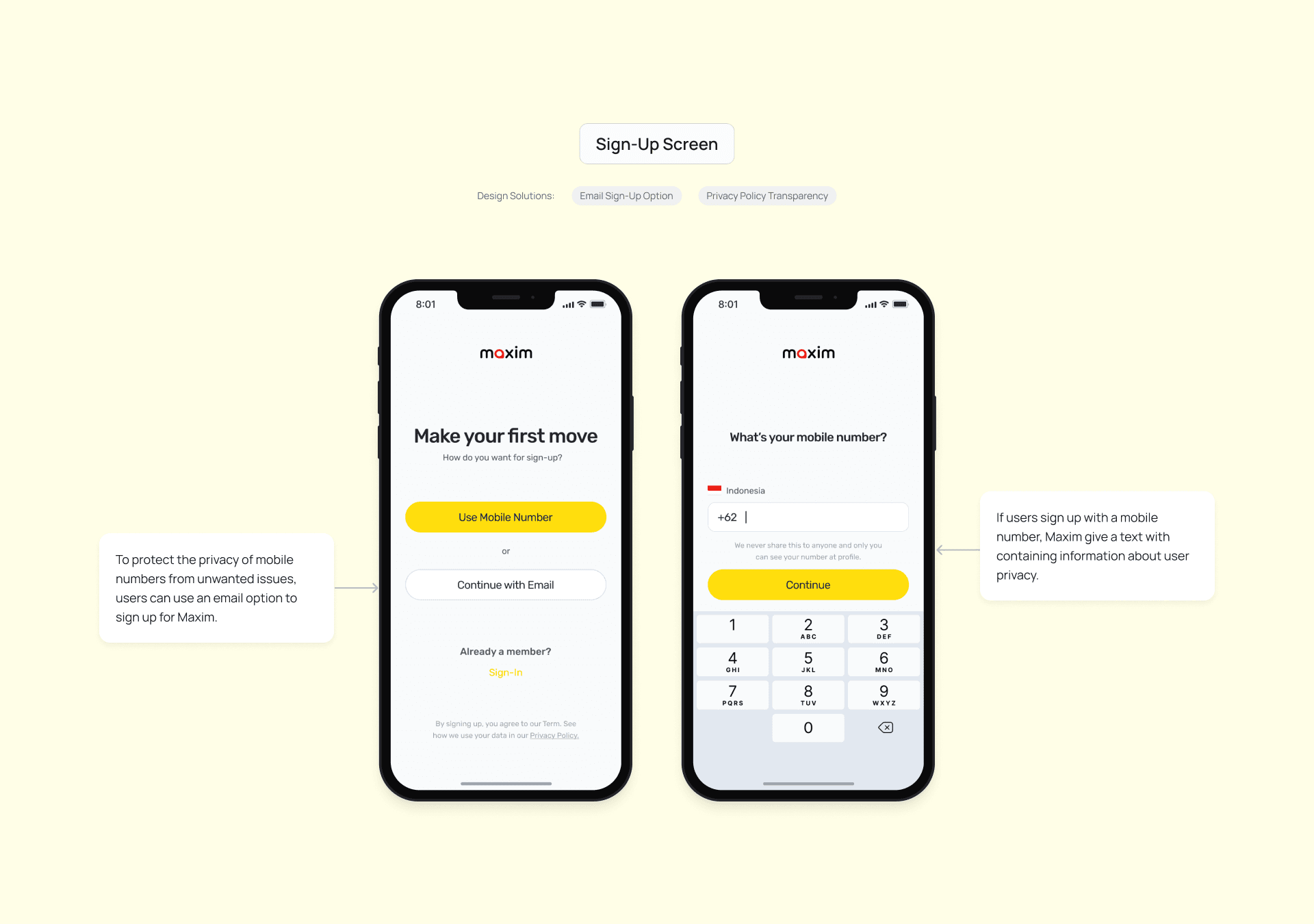
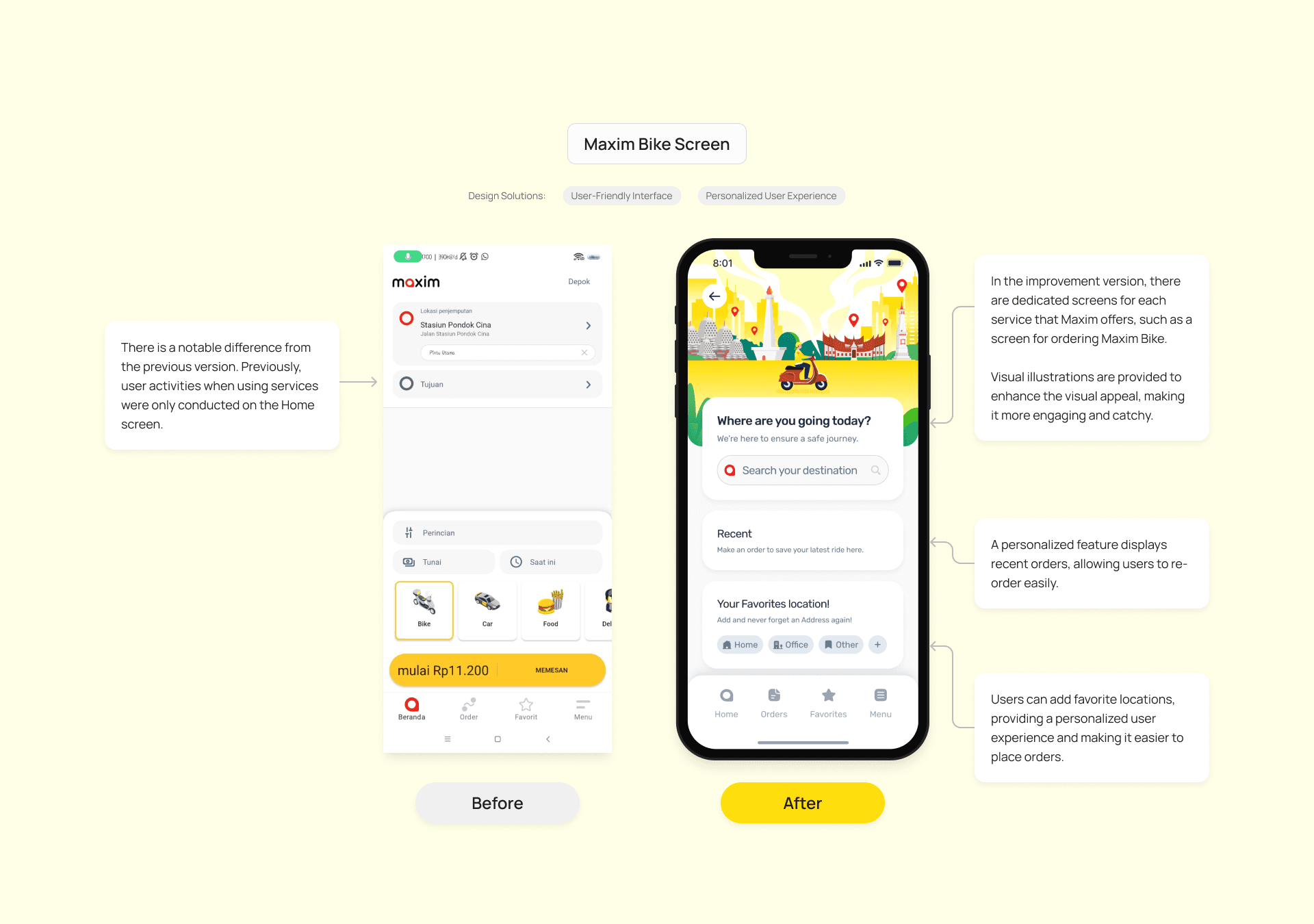
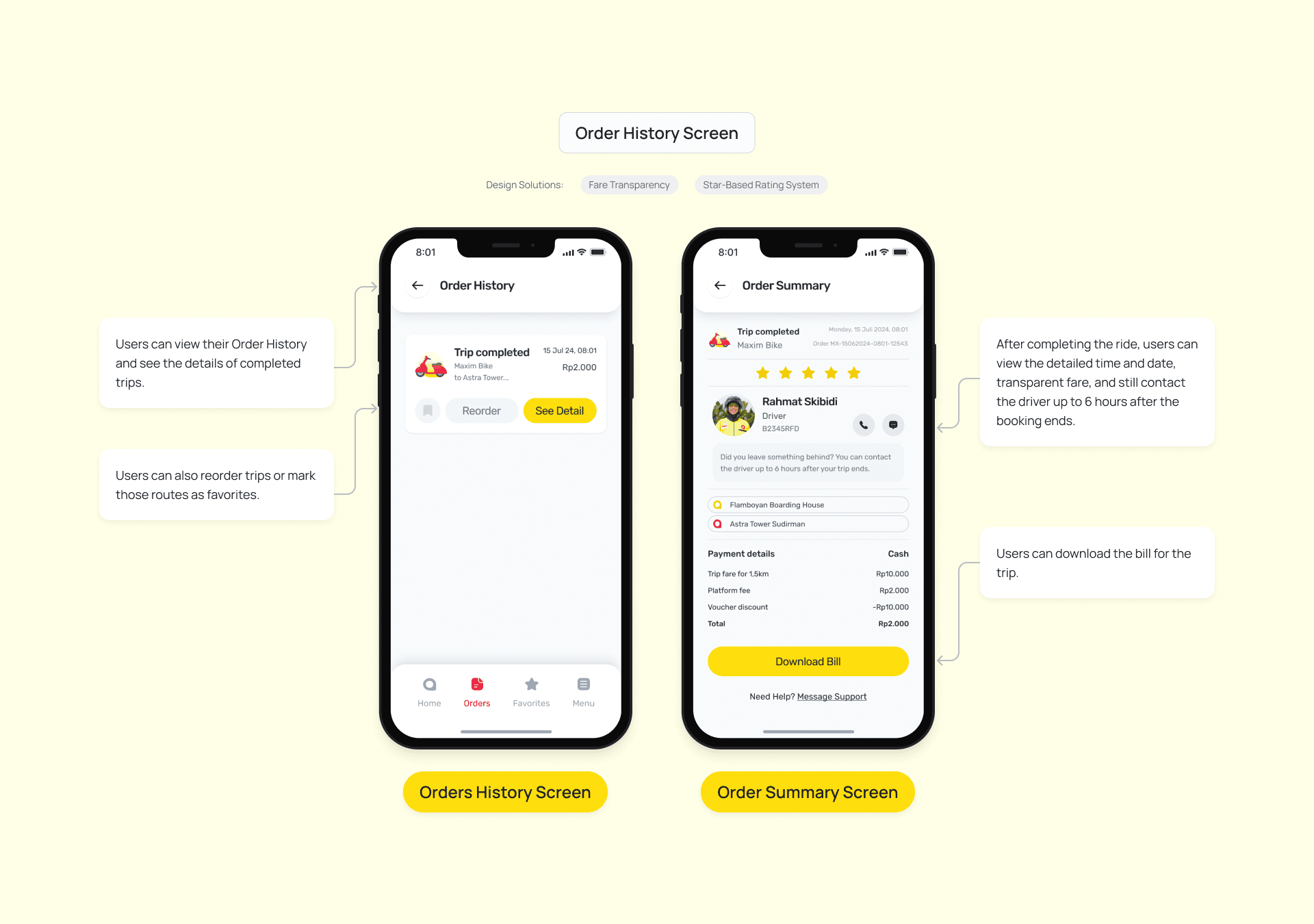
Here are the design solutions based on the order of screens from the user flow, starting from sign-up to order summary:
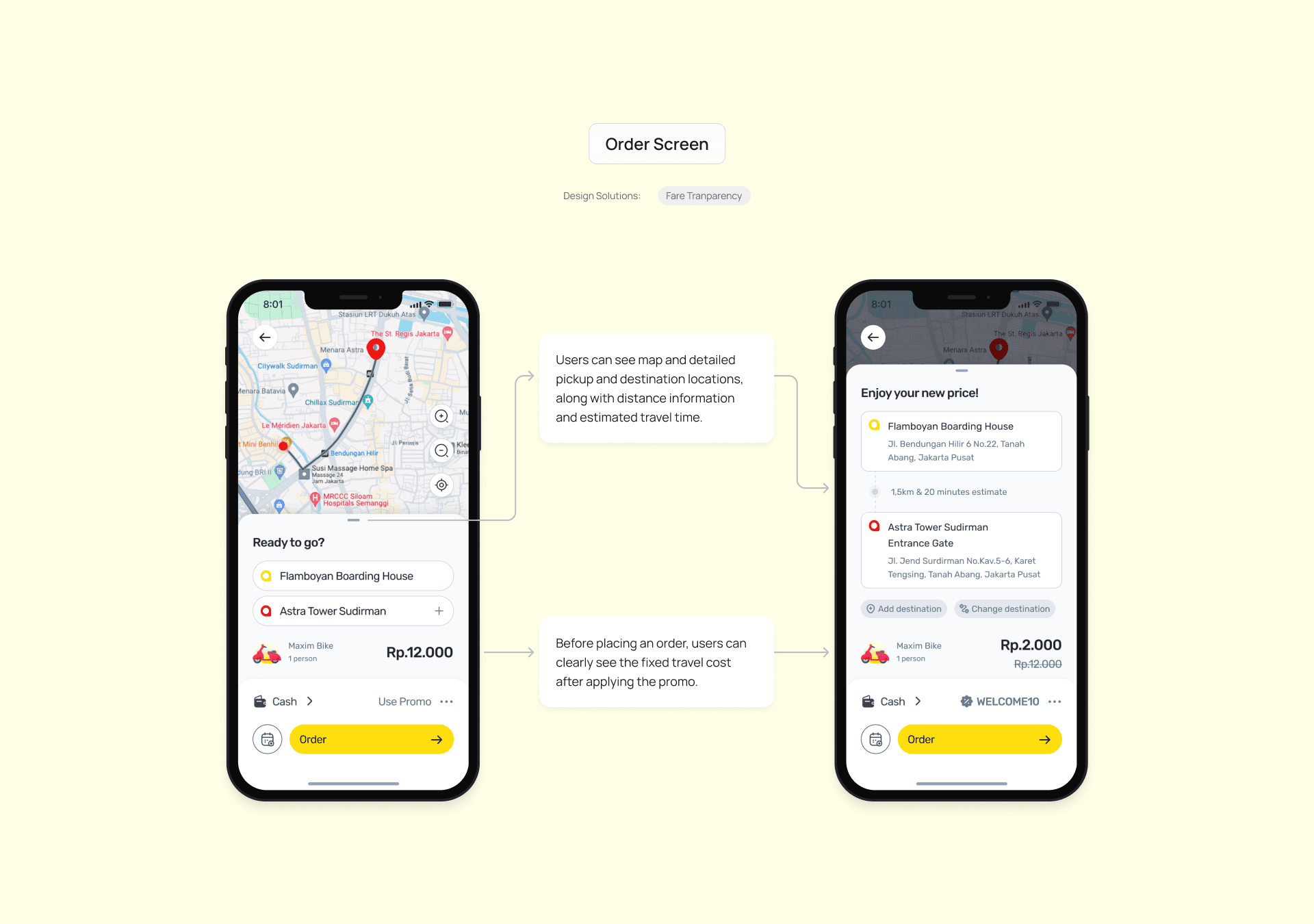
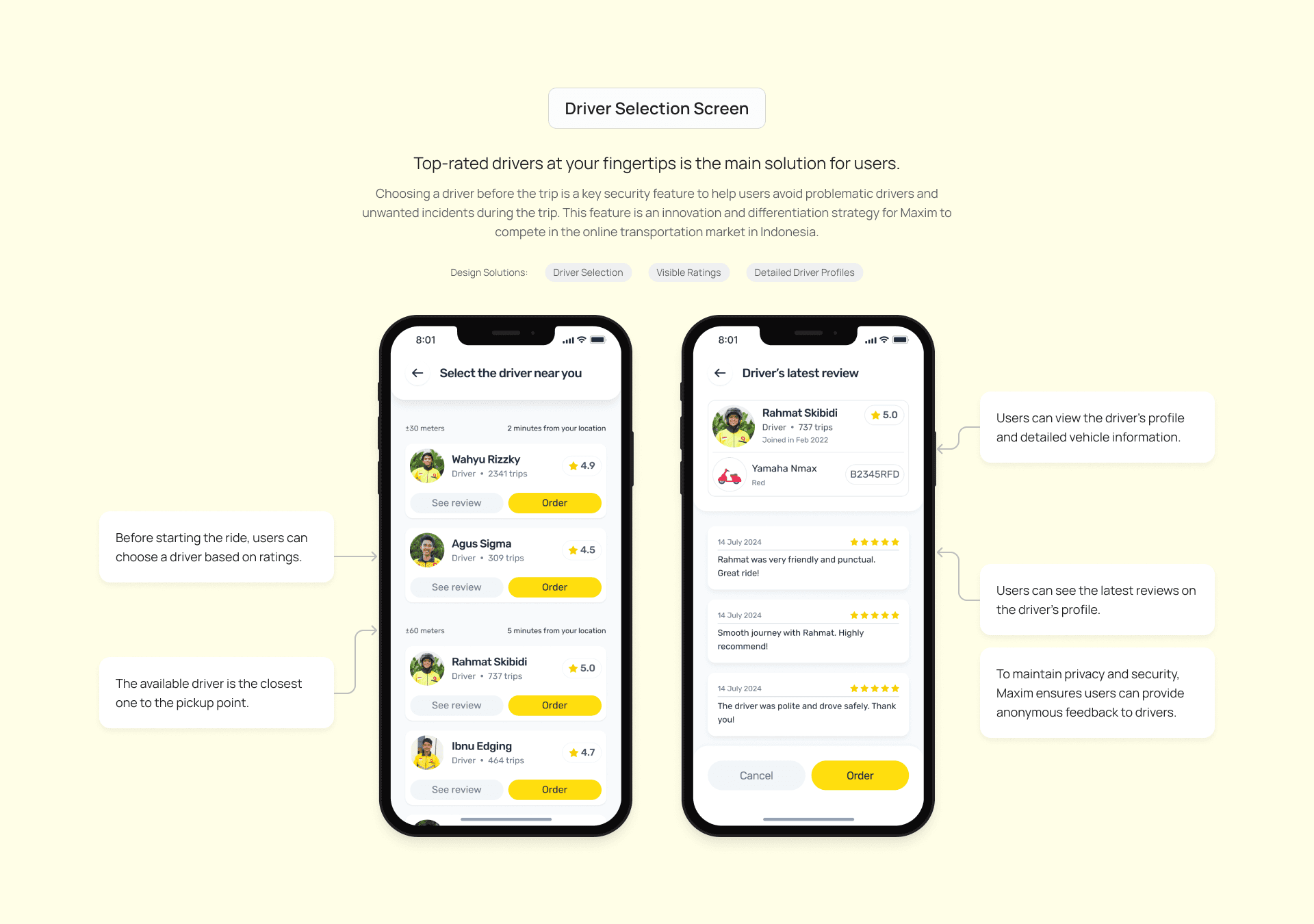
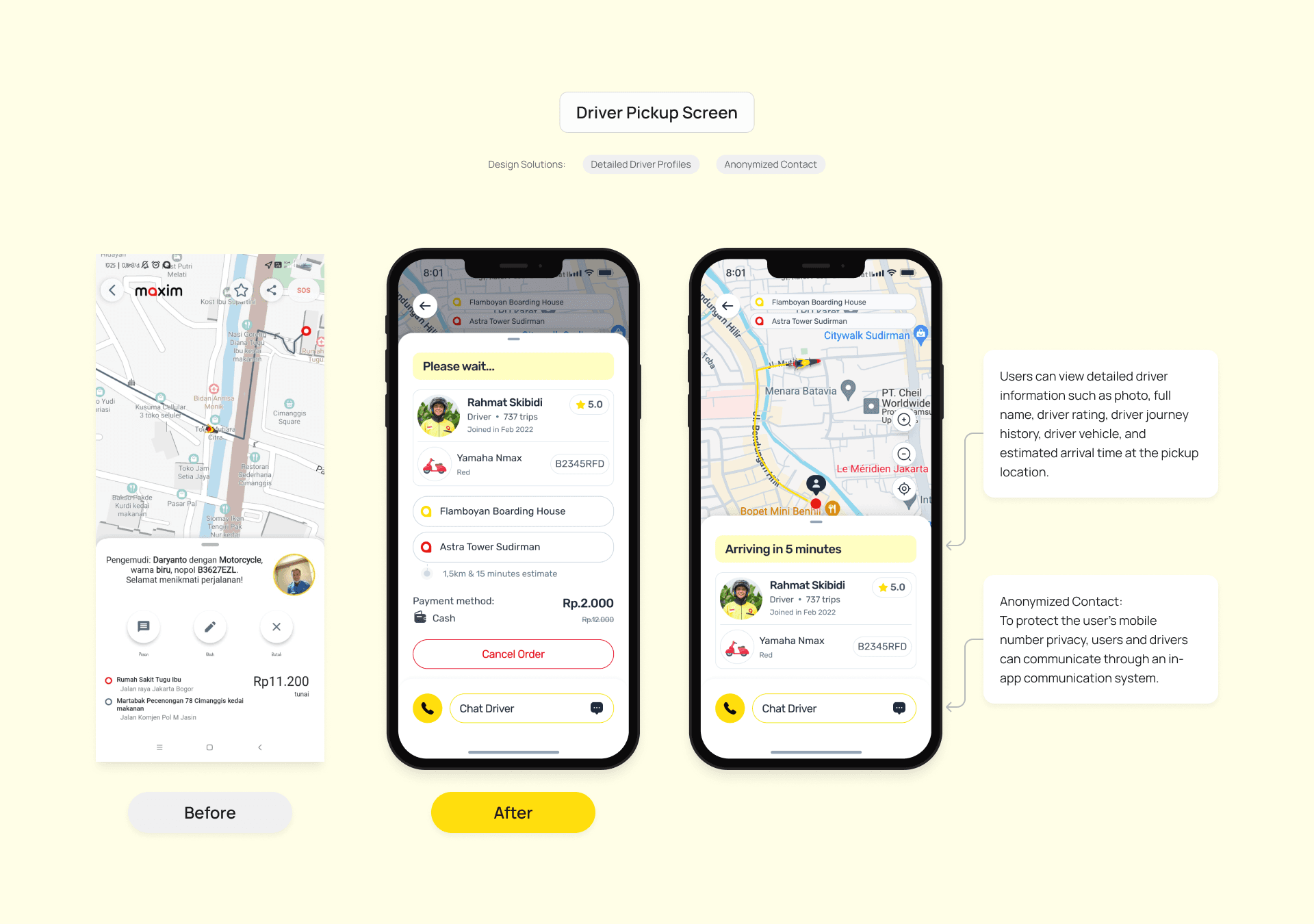
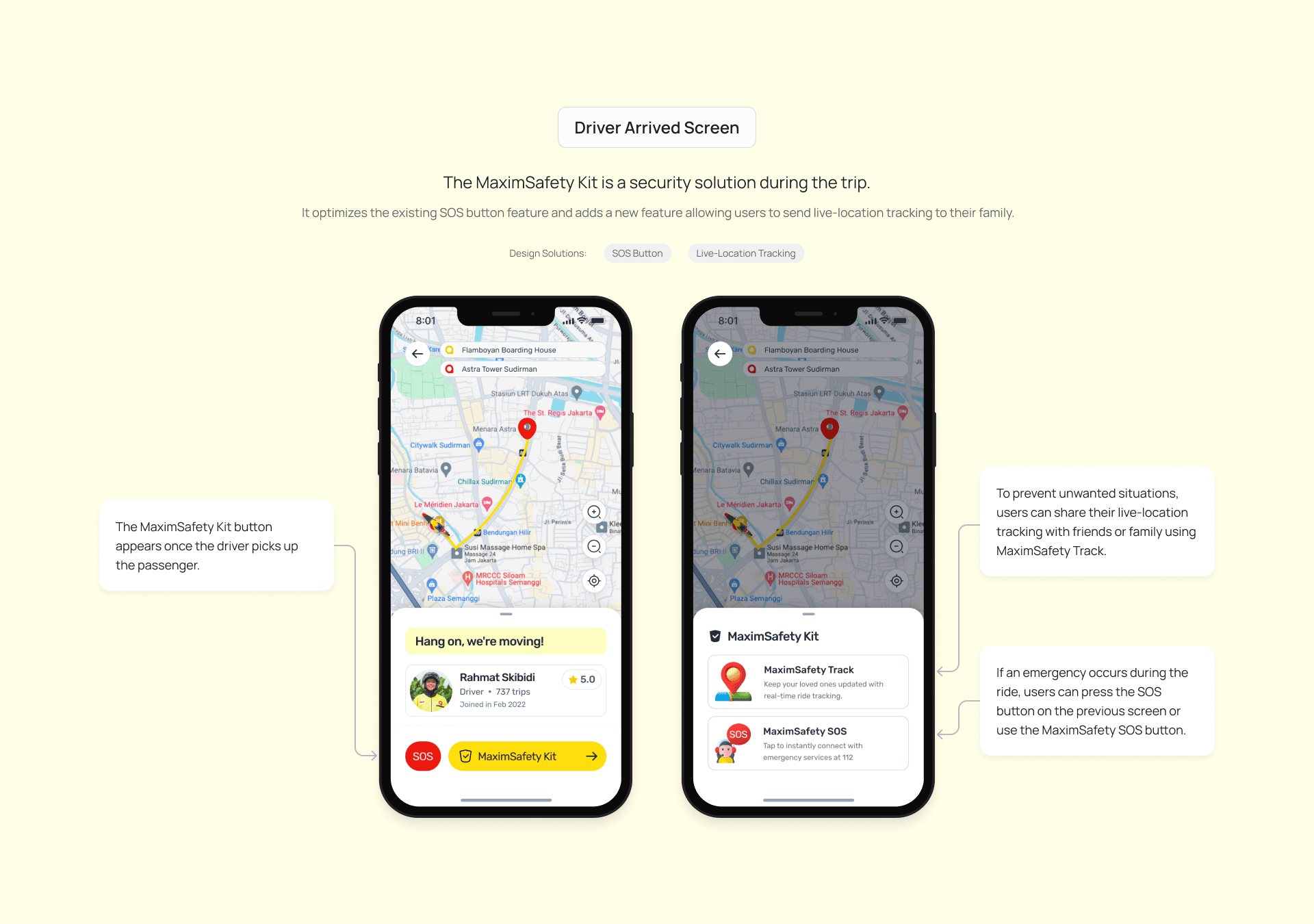
Putting Maxim to the Test
Gather Feedback and Refine Solutions
Usability Testing
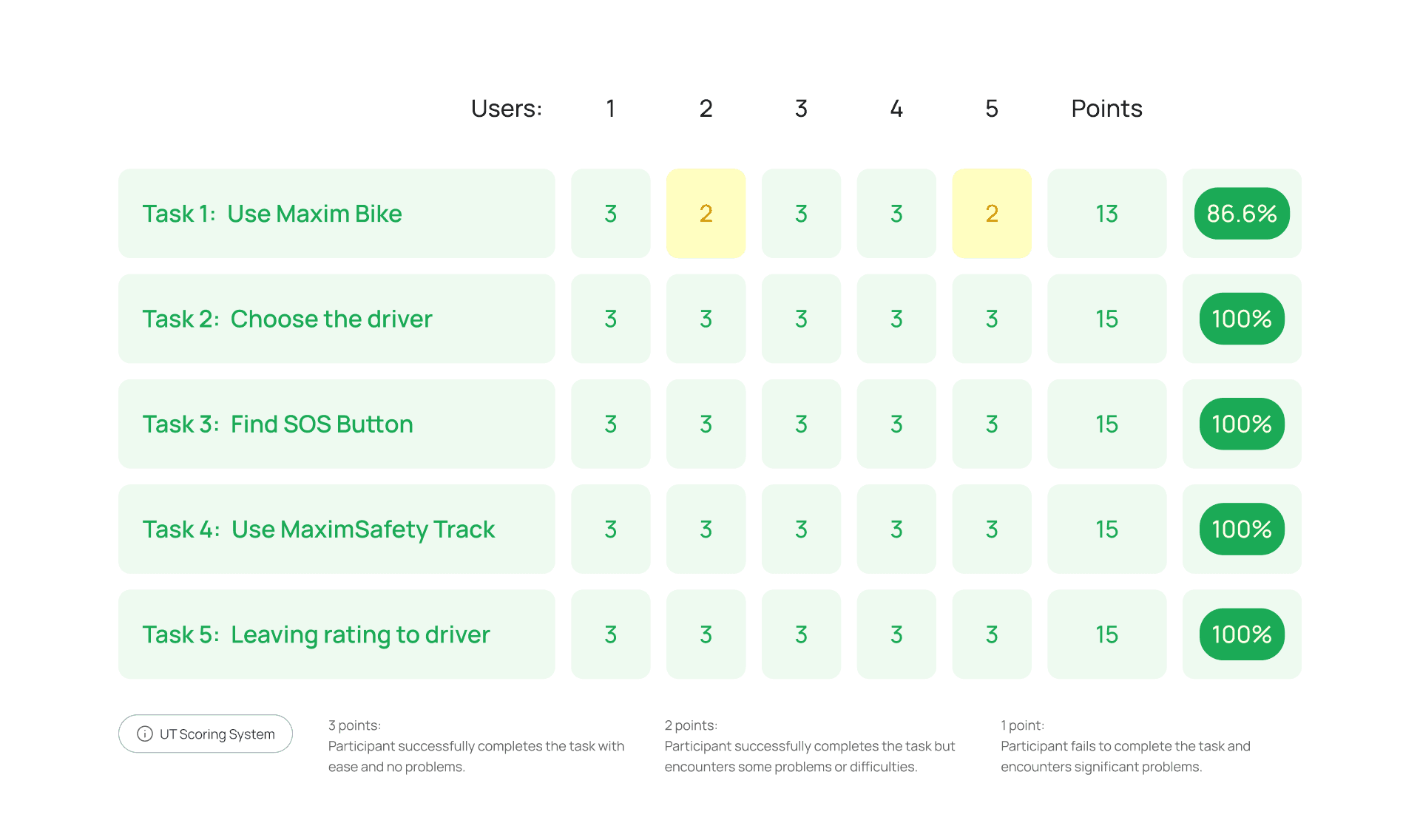
Five tasks were created to help users understand how to use the app, become aware of safety measures, and validate the results of the design solutions that were implemented, using the same participants from the preliminary usability testing.
Scenario:
Imagine you are Ayu, living in a boarding house near your office in Jakarta. You use Maxim Bike to commute to work in the morning. You choose your driver, Pak Rahmat Skibidi.
On your way to the office, you notice a new feature in Maxim, the MaximSafety Kit. You make sure to be aware of these safety features and feel secure. You see the SOS button and decide to try out the MaximSafety Kit. You send a Live-Location Tracking to your family during the ride, and it makes you feel safe.
Finally, you arrive at the office safely and with peace of mind. You give Pak Rahmat a 5-star rating for his service.
Usability Testing Result
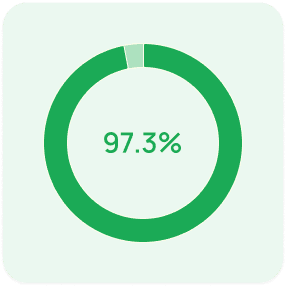
The average success rate is 97,3%, highlighting the success of the product improvements, which are easy to use for users.
Moreover, users are more aware of the safety features and feel a greater sense of trust and security when using these successful improvements in the Maxim app.
Result
This project was about more than just redesigning an app—it was about restoring trust. By listening to user concerns and addressing them head-on, this improvement could hopefully put Maxim in a stronger position to compete in the Indonesian market. The combination of affordability and safety makes Maxim a compelling option for riders who value both cost and peace of mind.
The improvements implemented in this case study provide solutions based on user needs. Compared to the previous version, participants in user interviews noticed a significant difference. The average success rate increased by 28.4% from the preliminary usability testing to the usability testing, which is a considerable achievement and brings me great satisfaction.
Lesson Learned
This was my first experience working on a case study and design challenge. I encountered several challenges, such as managing time and improving my skills in Figma. Additionally, there were difficulties related to usability testing. Although the participants were my friends, scheduling was still tough, highlighting the potential complexity of working with real participants in the future.
Next
Maxim’s journey isn’t over, and neither is mine. This project was just the beginning of a larger mission to design experiences that are not only functional but also make people feel safe, secure, and valued.
Let’s build something together.